11 Newest AI Tools for Sourcing & Recruiting Tech Talent Fast

Hiring technical talent is becoming more competitive, while recruiters are expected to move faster with fewer resources.
That's why AI recruiting tools are gaining attention, helping teams source candidates, improve matching accuracy, and automate repetitive hiring tasks.
But with dozens of new platforms entering the market, knowing which ones are actually worth considering can be difficult.
In this guide, you'll discover:
• 11 newest AI recruiting tools for tech hiring
• Key features and strengths of each platform
• How to choose the right tool for your hiring needs
Factors We Considered to Make This List
The AI recruiting market is growing quickly, with new platforms launching every month.
To identify the most promising tools for sourcing and recruiting tech talent, we evaluated each platform using the following criteria.
1. Building a Strong AI-Powered Sourcing Experience
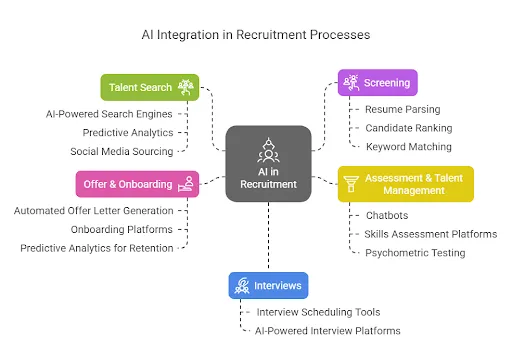
The ability to find qualified candidates quickly was one of our most important considerations.
We prioritized tools that use AI to search across multiple talent sources, uncover passive candidates, and reduce the time recruiters spend manually searching databases and job boards.
2. Improving Candidate Matching Accuracy
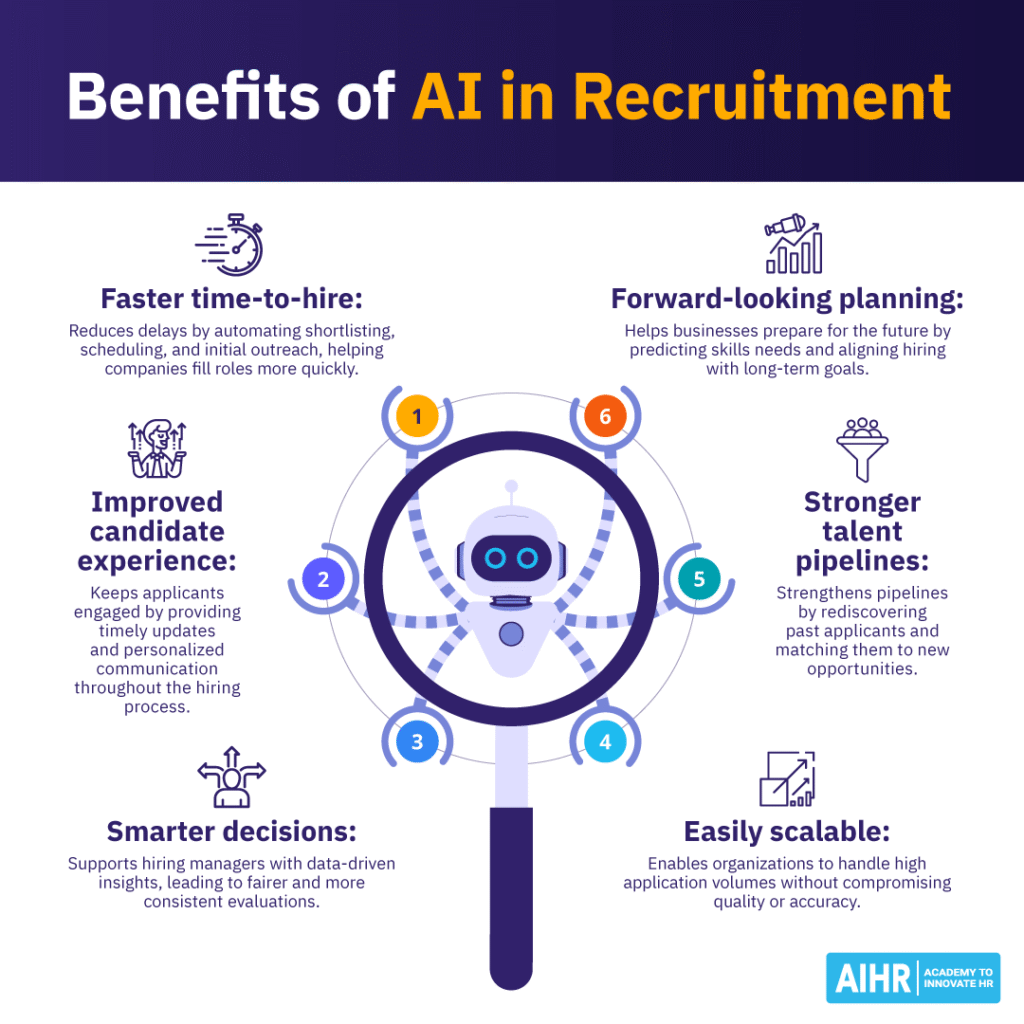
Finding candidates is only half the challenge.
The best AI recruiting tools help recruiters identify the right candidates by analyzing skills, experience, job requirements, and hiring preferences.
We favored platforms that focus on delivering higher-quality matches instead of simply generating larger candidate lists.
3. Accelerating Recruiter Outreach and Engagement
Outreach often becomes a major bottleneck during hiring.
We looked for tools that help recruiters personalize messages, automate follow-ups, and maintain candidate engagement throughout the hiring process without sacrificing the human touch.
4. Supporting Technical and Engineering Hiring Needs
Since this list focuses on tech talent, we paid special attention to platforms built for engineering and technical recruiting.
This includes tools that can assess technical skills, understand specialized roles, and surface candidates with relevant expertise more effectively.
5. Integrating Smoothly With Modern Recruiting Workflows
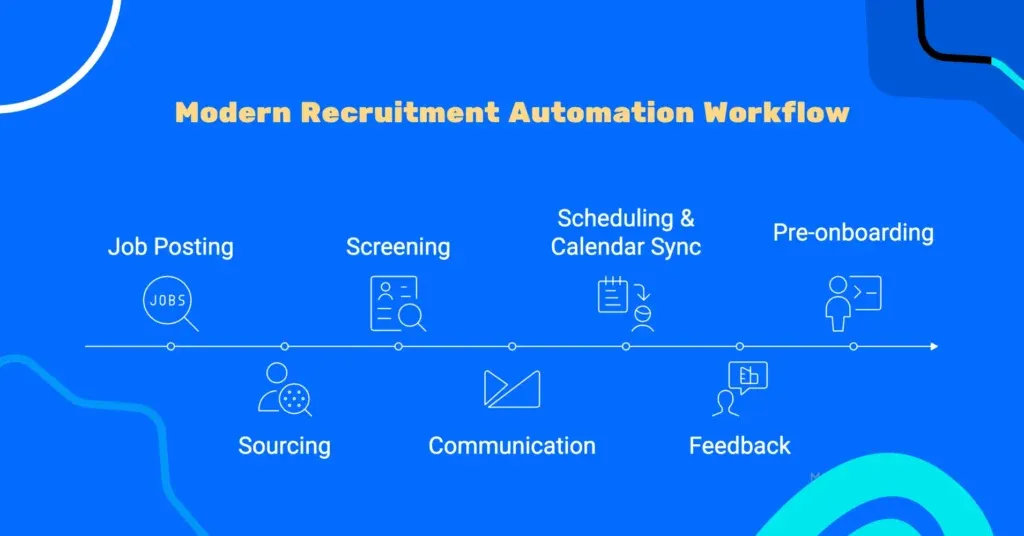
Recruiters already use multiple systems to manage hiring.
We favored tools that integrate easily with applicant tracking systems, recruiting platforms, communication tools, and existing workflows to minimize disruption and improve adoption.
6. Demonstrating Product Innovation and Growth
The AI recruiting space evolves rapidly.
To make this list, companies needed to show strong product innovation, unique capabilities, or meaningful growth that differentiates them from traditional sourcing and recruiting solutions.
7. Maintaining a Company Age of Three Years or Less
This article focuses specifically on newer entrants in the market.
We limited our selection to companies that are three years old or younger, allowing us to highlight emerging platforms that are bringing fresh ideas and new approaches to recruiting.
8. Helping Recruiters Reduce Time-to-Hire and Manual Work
Ultimately, recruiting technology should help teams hire faster and work more efficiently.
We prioritized tools that automate repetitive recruiting tasks, streamline hiring workflows, and enable recruiters to spend more time building relationships with candidates and hiring managers.
11 Newest AI Tools for Sourcing & Recruiting Tech Talent Fast
AI recruiting software is evolving quickly, and many of the most innovative products have emerged only within the last few years.
These platforms are rethinking how recruiters source candidates, evaluate talent, automate outreach, and fill technical roles faster.
Below are some of the newest AI recruiting tools making an impact in tech hiring.
1. Leelu.ai
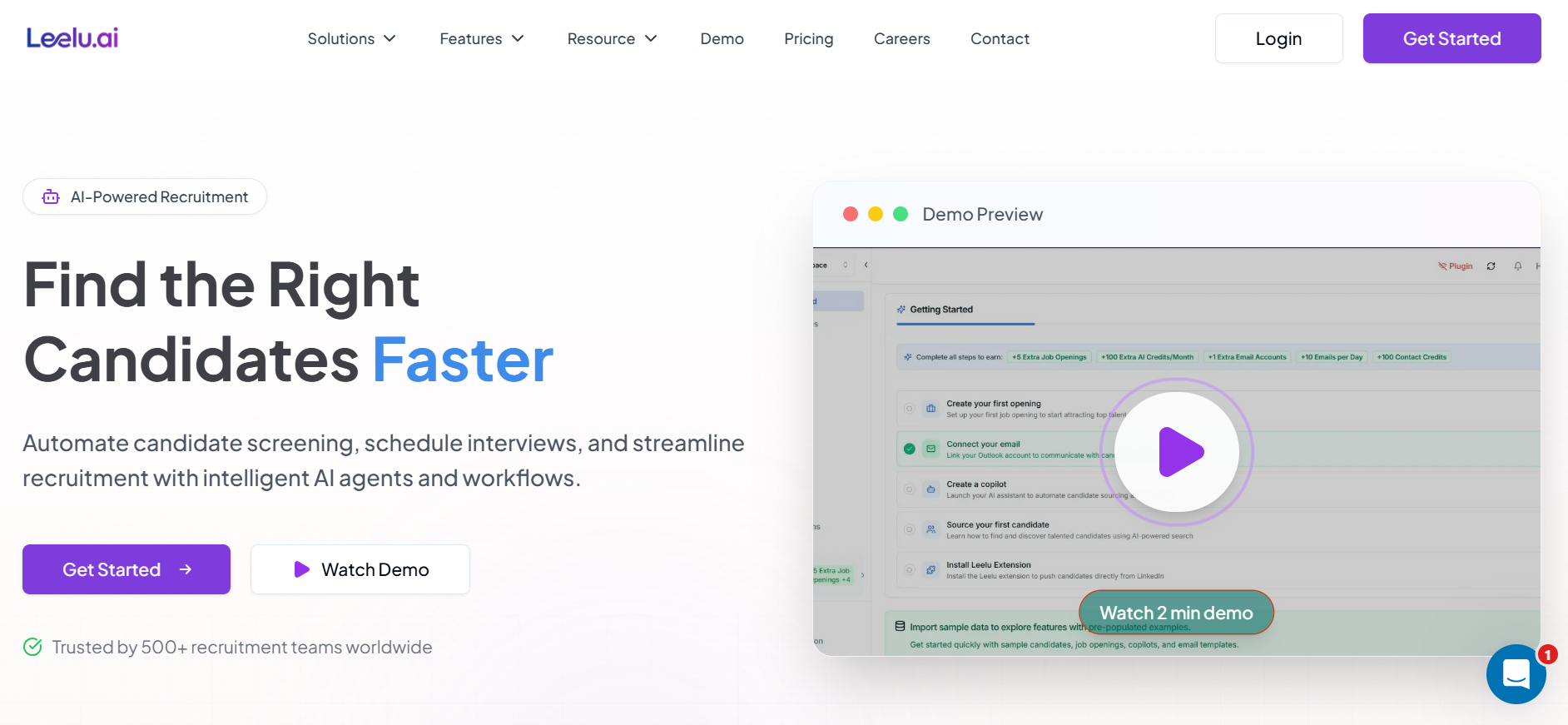
Leelu.ai is an AI recruiting copilot designed to automate the entire sourcing and hiring workflow.
Instead of requiring recruiters to jump between multiple tools, it combines sourcing, screening, outreach, follow-ups, and interview scheduling into a single platform.
The platform searches across hundreds of millions of candidate profiles from multiple talent sources and uses AI matching to identify candidates who closely fit job requirements.
What makes Leelu stand out is its end-to-end automation approach.
Recruiters can move from job creation to candidate engagement with significantly less manual effort while maintaining control over hiring decisions.
Key capabilities include:
- AI-powered candidate sourcing across multiple platforms
- Automated resume screening and candidate ranking
- Personalized outreach at scale
- AI-driven follow-ups and candidate engagement
- Interview scheduling and ATS integrations
For recruiting agencies and growing hiring teams, Leelu focuses on reducing time-to-hire while helping recruiters spend more time building relationships rather than managing administrative tasks.
2. Juicebox
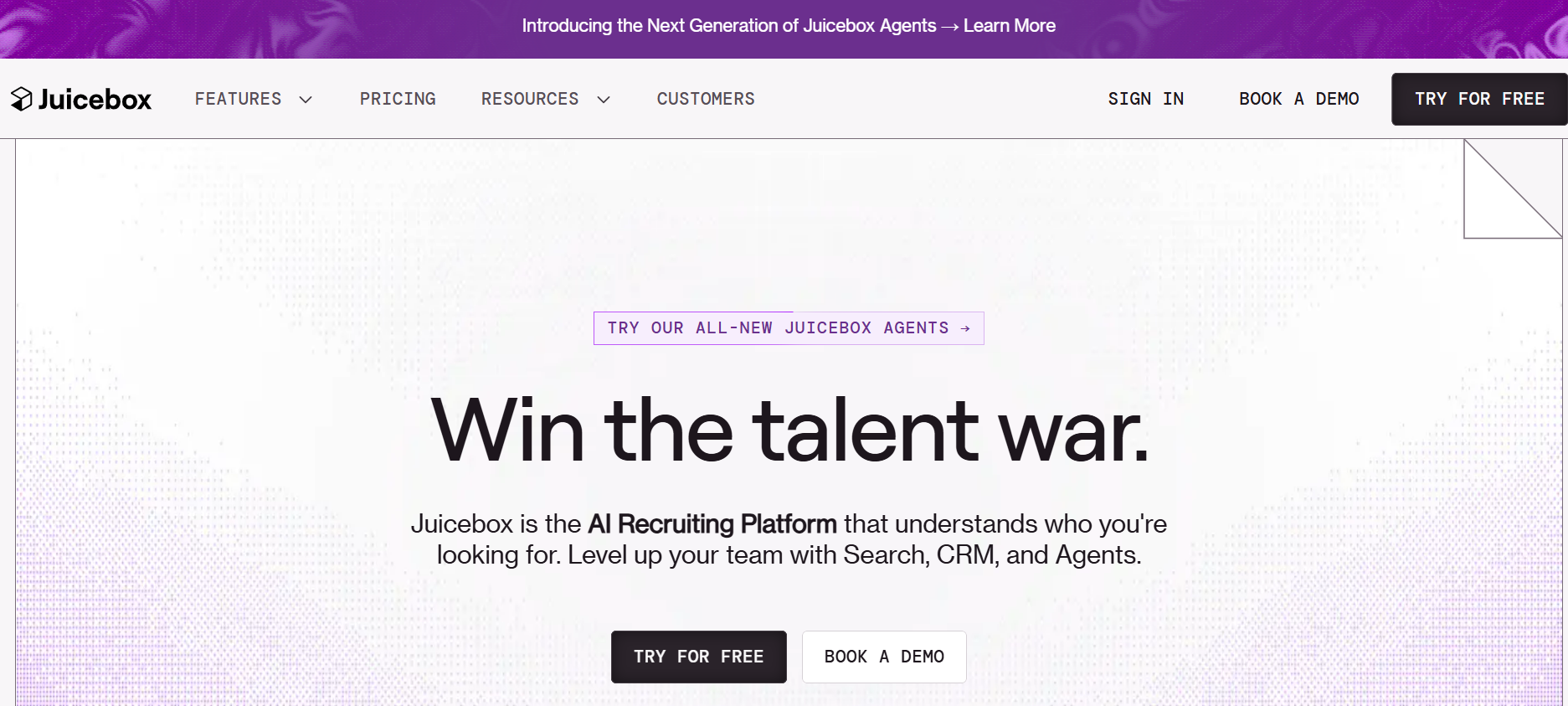
Juicebox is an AI sourcing platform built to simplify candidate discovery through natural language search.
Instead of relying on complex Boolean strings, recruiters can describe their ideal candidate using everyday language. The platform then uses AI to identify relevant talent from its data sources.
This approach makes sourcing more accessible, especially for recruiters who want faster search results without spending hours refining search queries.
Juicebox is particularly attractive for teams looking to improve sourcing productivity while reducing the learning curve associated with traditional recruiting tools.
3. HeroHunt.ai
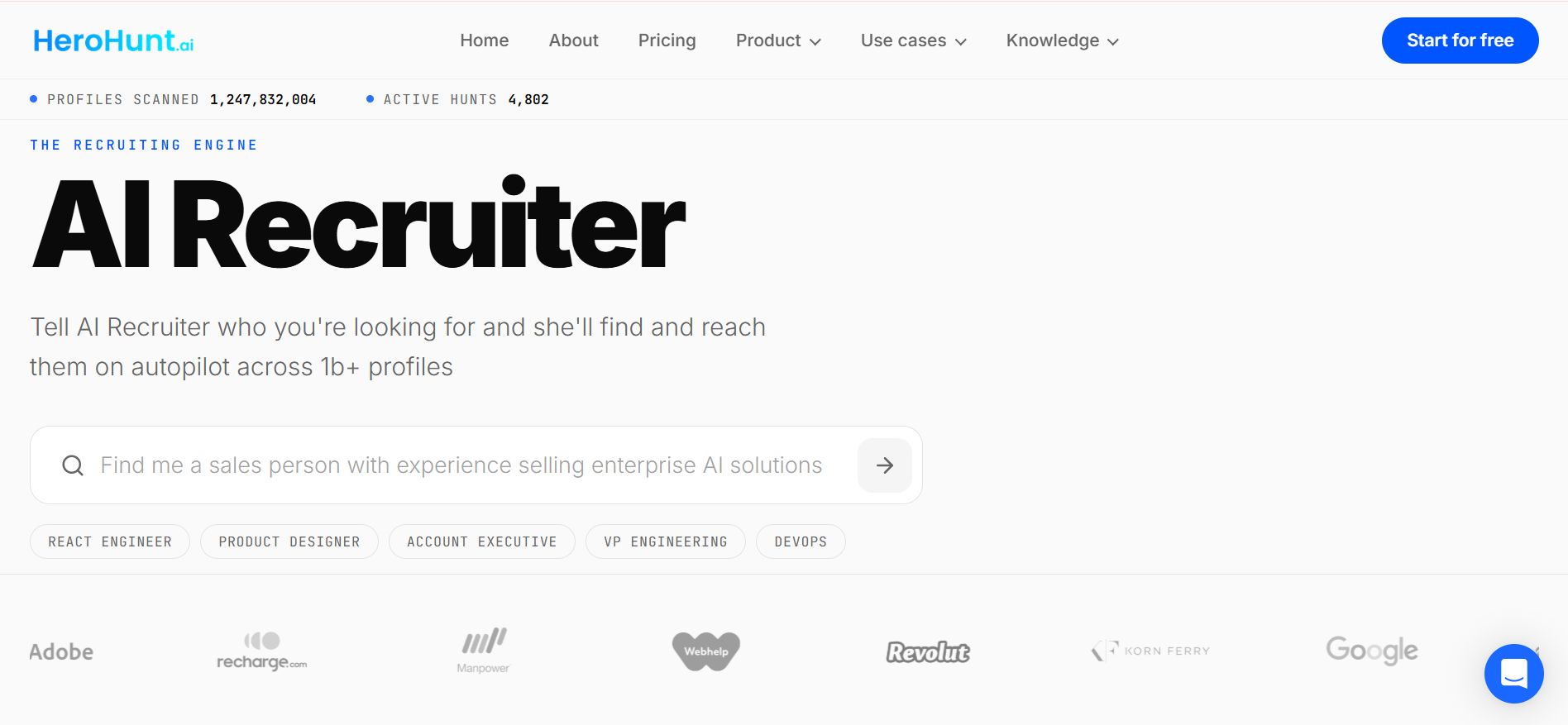
HeroHunt.ai focuses heavily on AI-powered candidate sourcing and outreach automation for recruiting teams.
The platform helps recruiters identify potential candidates, enrich profile data, and launch personalized outreach campaigns without requiring extensive manual work.
One of its strengths is helping recruiters engage passive candidates who may not be actively applying for jobs but could still be open to opportunities.
For smaller recruiting teams that need to scale sourcing efforts without increasing headcount, HeroHunt provides automation that helps maintain consistent candidate engagement throughout the hiring process.
4. Mercor
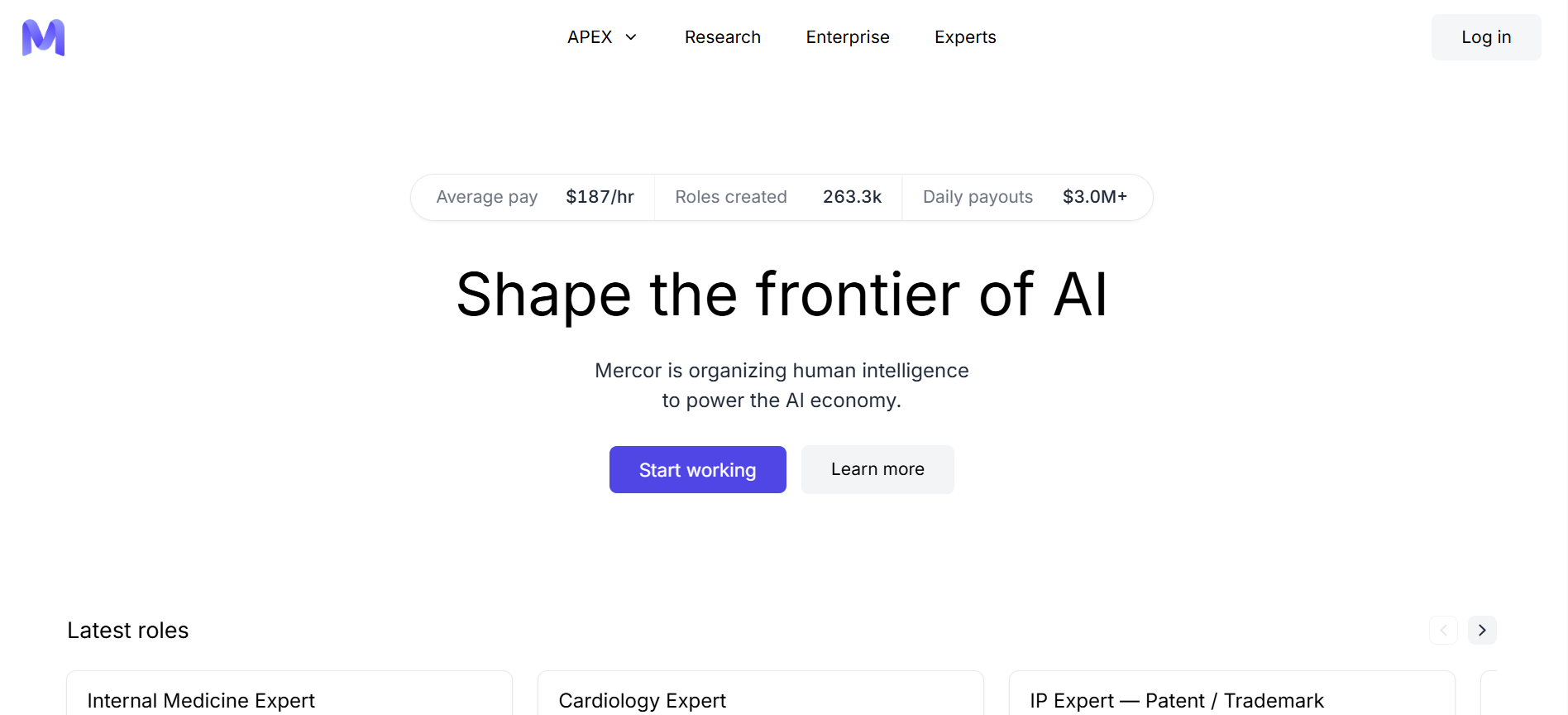
Mercor has gained attention for using AI to evaluate, match, and connect talent with hiring companies at scale.
Rather than functioning solely as a sourcing platform, Mercor combines candidate assessment with matching technology to streamline hiring decisions.
The platform uses AI-driven evaluations to help employers identify candidates who align with role requirements and performance expectations.
Its growing presence within technical hiring has made it particularly interesting for organizations looking to assess candidates more efficiently while reducing screening time.
As AI-driven talent marketplaces continue to expand, Mercor represents a new approach to connecting companies with qualified professionals.
5. Paraform
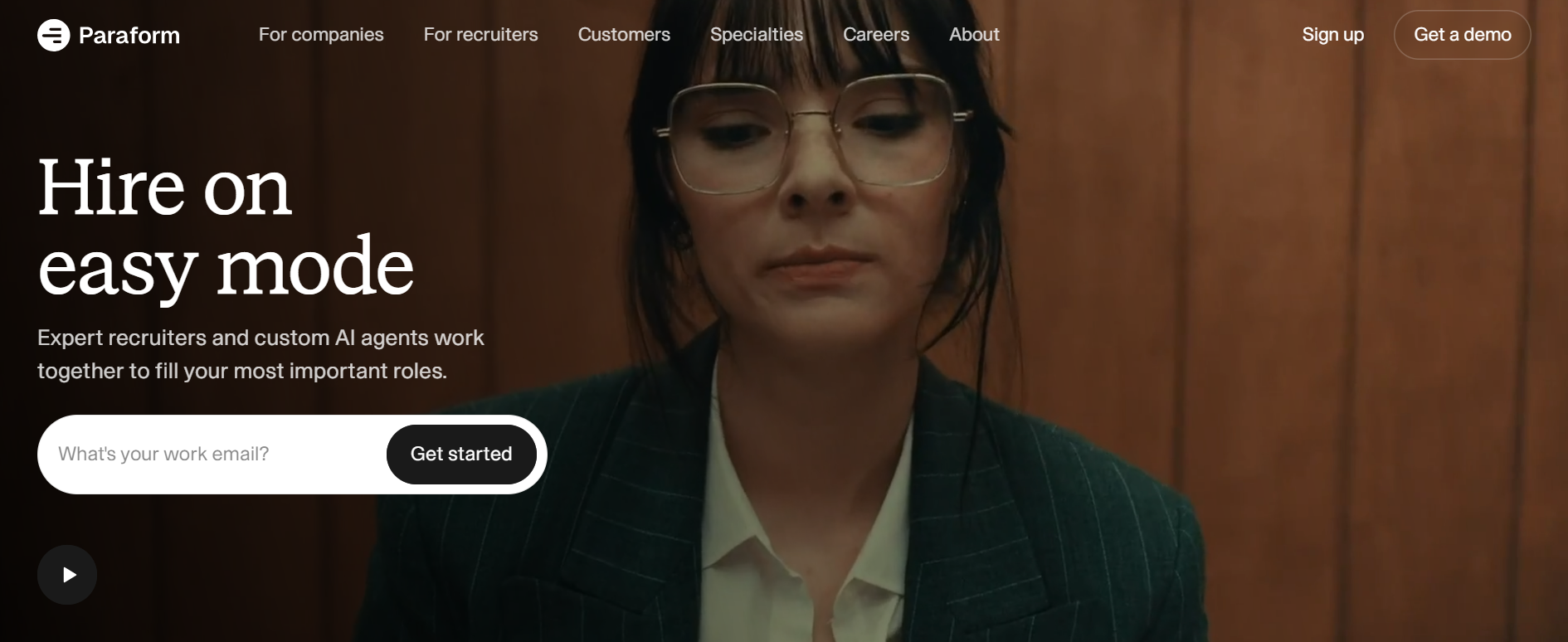
Paraform takes a marketplace-oriented approach to recruiting by combining recruiter networks with AI-powered hiring workflows.
The platform enables recruiters to collaborate on searches while using AI to accelerate sourcing, candidate identification, and hiring execution.
This model helps companies access broader talent networks without relying entirely on internal recruiting resources.
Paraform is especially appealing for organizations hiring hard-to-fill technical roles where specialized recruiter expertise and faster candidate discovery can make a meaningful difference.
Its blend of network-driven recruiting and AI-powered automation creates a unique position within the emerging recruiting technology landscape.
6. ConverzAI
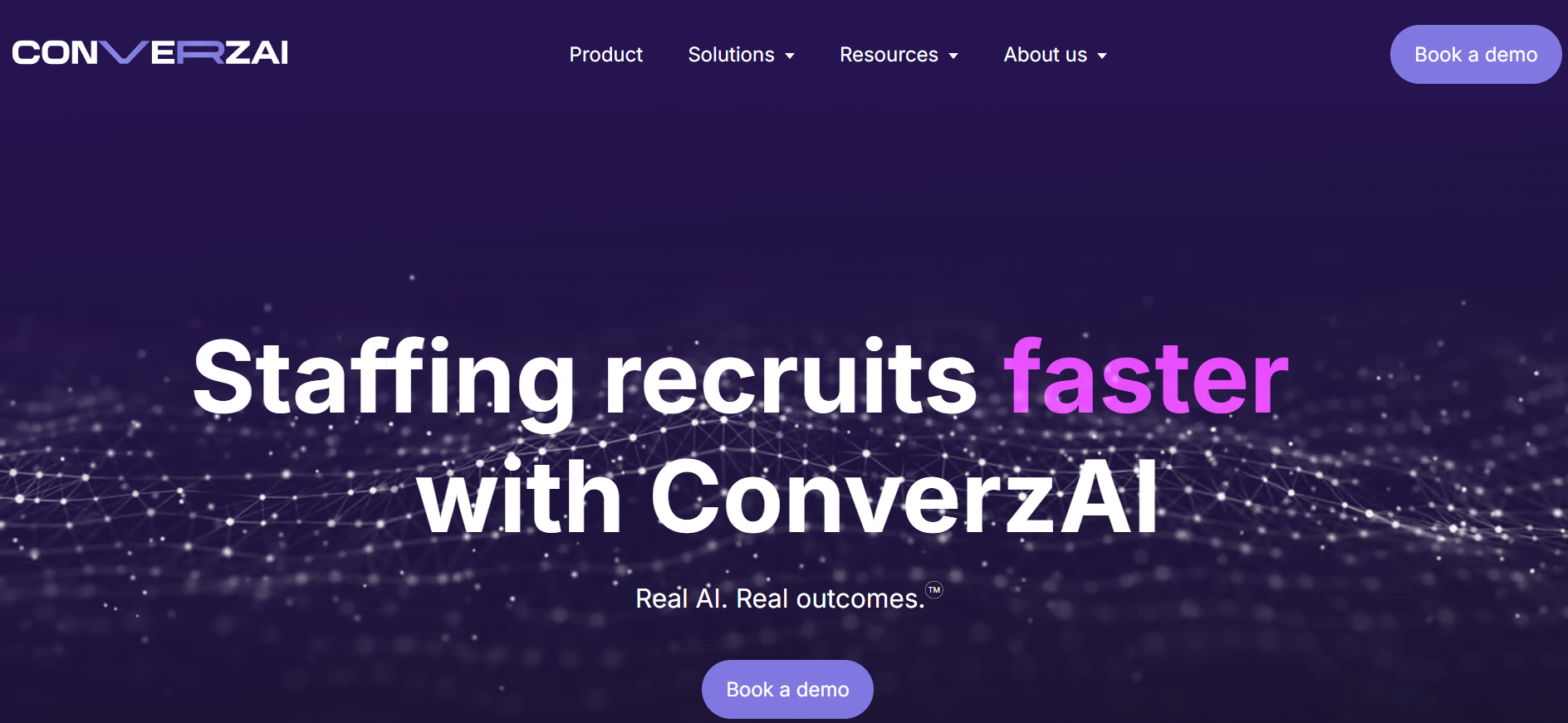
ConverzAI focuses on automating candidate conversations through AI-powered voice and chat interactions.
Instead of requiring recruiters to manually conduct every initial screening conversation, the platform can engage candidates, collect information, answer common questions, and qualify applicants automatically.
This helps recruiting teams manage larger applicant volumes while maintaining a consistent candidate experience.
Organizations dealing with high application volumes often struggle to respond quickly to every candidate.
ConverzAI addresses this challenge by creating an always-on recruiting experience that keeps candidates engaged while reducing recruiter workload.
As conversational AI continues to improve, platforms like ConverzAI are helping redefine how recruiters manage candidate communication at scale.
7. Dover
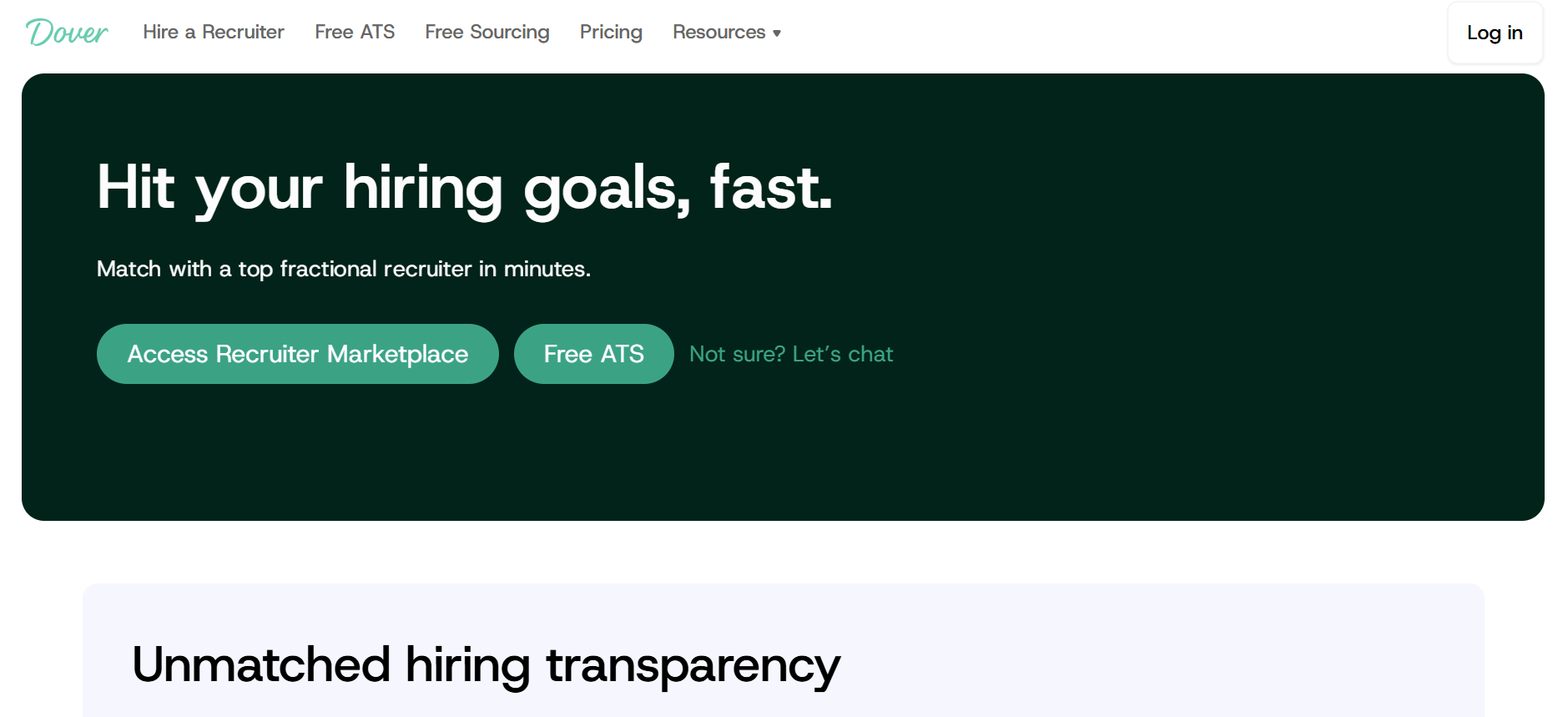
Dover has positioned itself as an AI-powered recruiting platform focused on helping startups and growing companies hire more efficiently.
The platform combines sourcing, outreach, applicant tracking, and recruiting automation into a streamlined workflow.
Rather than forcing hiring teams to manage multiple disconnected systems, Dover aims to centralize key recruiting activities in one place.
Its automation capabilities help recruiters spend less time on repetitive tasks and more time engaging with qualified candidates and hiring managers.
For startups that need to move quickly without building large recruiting teams, Dover offers a practical approach to scaling hiring operations.
8. Tezi
Tezi is designed to automate many of the administrative tasks that slow down recruiting teams.
The platform acts as an AI recruiting assistant, helping recruiters manage sourcing activities, candidate communication, interview coordination, and workflow execution.
One of its key advantages is reducing the amount of manual work required throughout the hiring process. This allows recruiters to focus more on relationship building, candidate evaluation, and strategic hiring decisions.
Teams looking to improve recruiter productivity often find value in platforms like Tezi because they help remove operational bottlenecks that can delay hiring.
9. Perfect
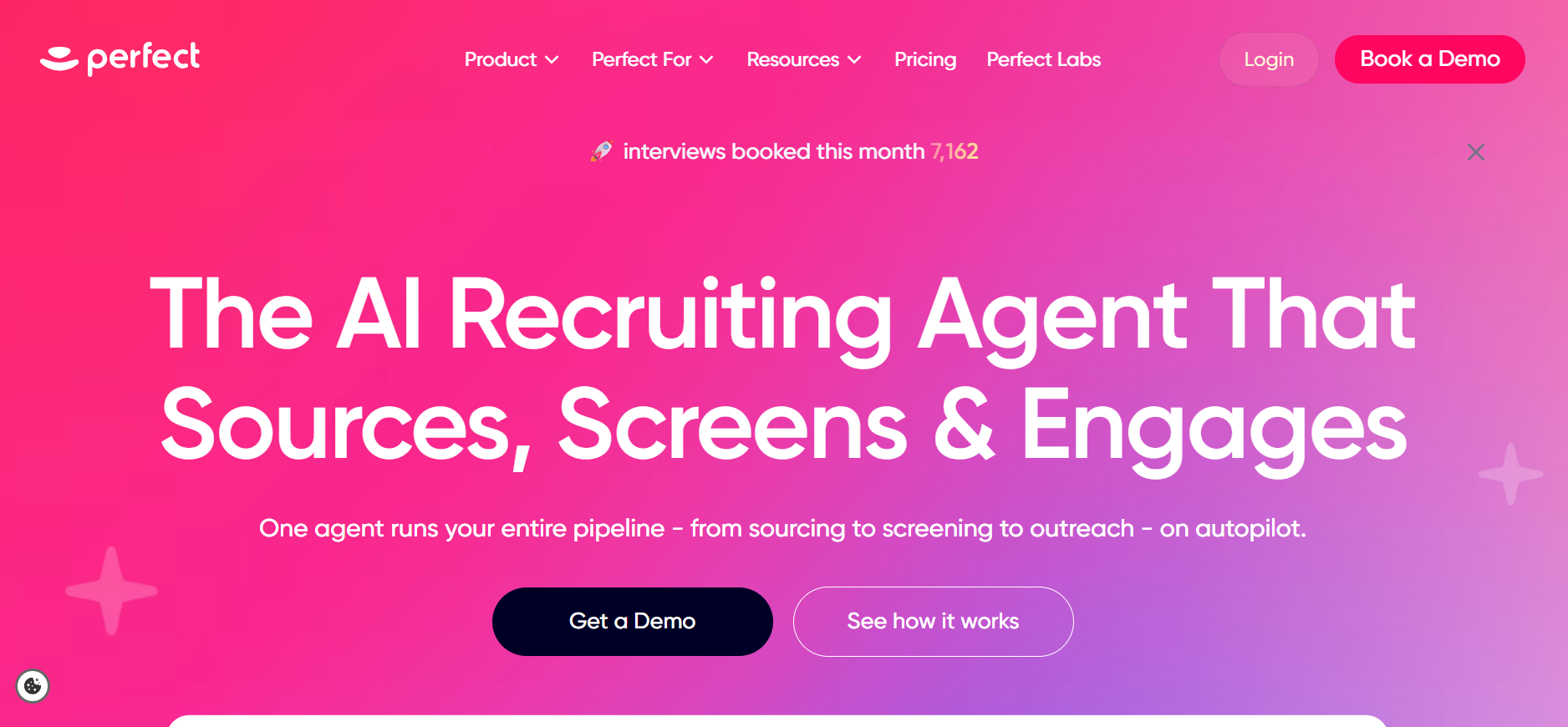
Perfect is an AI recruiting platform focused on sourcing, matching, and engaging candidates at scale.
The platform uses AI to analyze hiring requirements and identify candidates who align with both skill and experience expectations. It also helps recruiters automate outreach activities and prioritize the most relevant talent.
What makes Perfect interesting is its emphasis on combining candidate discovery with matching intelligence.
Instead of simply generating long candidate lists, the platform aims to surface candidates who are more likely to meet hiring criteria and respond to outreach efforts.
This can help recruiters improve both sourcing efficiency and candidate quality throughout the hiring funnel.
10. Fetch.ai Recruiting
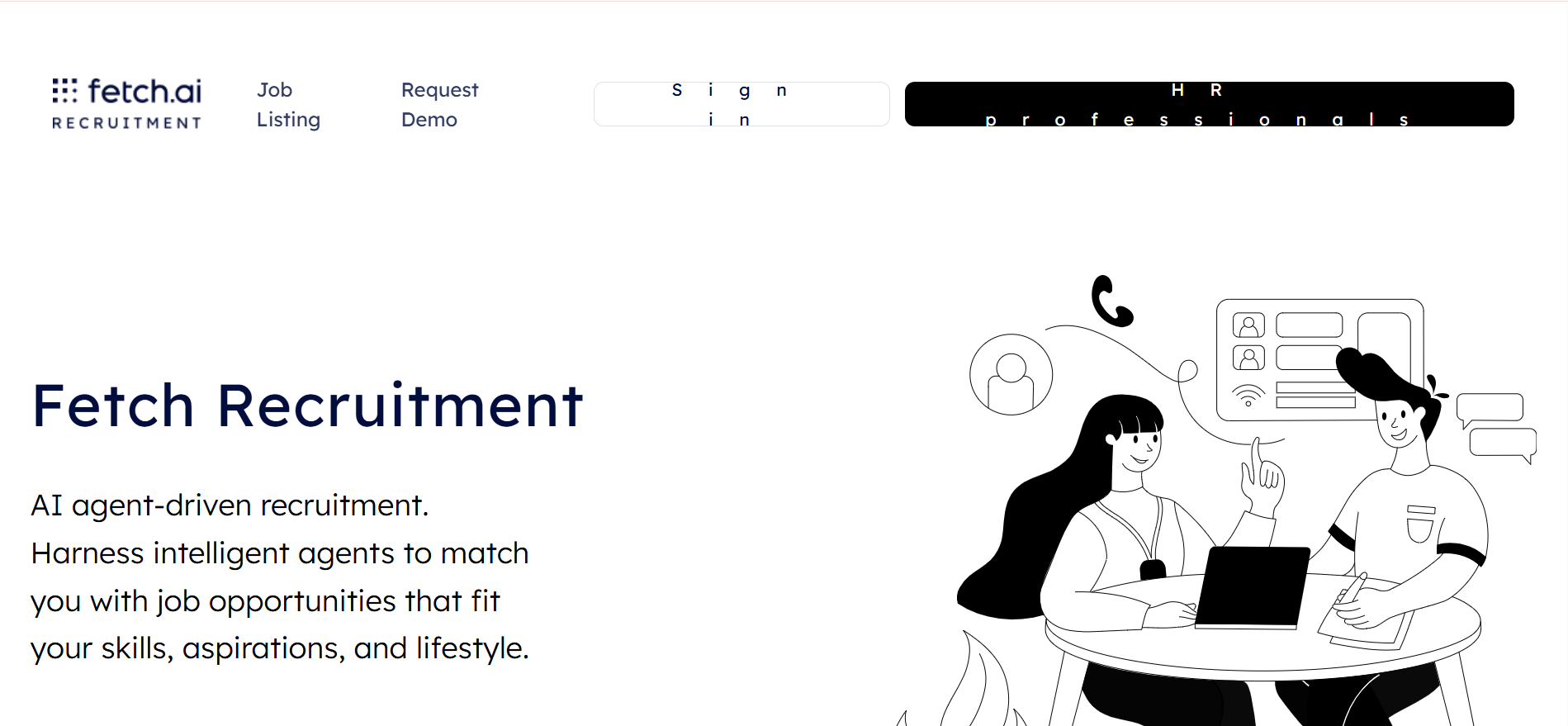
Fetch.ai Recruiting applies artificial intelligence and automation to streamline talent acquisition workflows.
The platform focuses on helping organizations discover candidates, manage recruiting processes, and reduce the time spent on repetitive hiring activities.
As AI adoption grows across recruiting, solutions like Fetch.ai Recruiting are exploring new ways to automate talent discovery while supporting recruiter decision-making.
Its focus on workflow efficiency makes it particularly relevant for organizations that need to manage growing hiring demands without significantly increasing recruiting resources.
By reducing manual effort across sourcing and candidate management, the platform helps recruiters operate more effectively at scale.
11. Scout AI
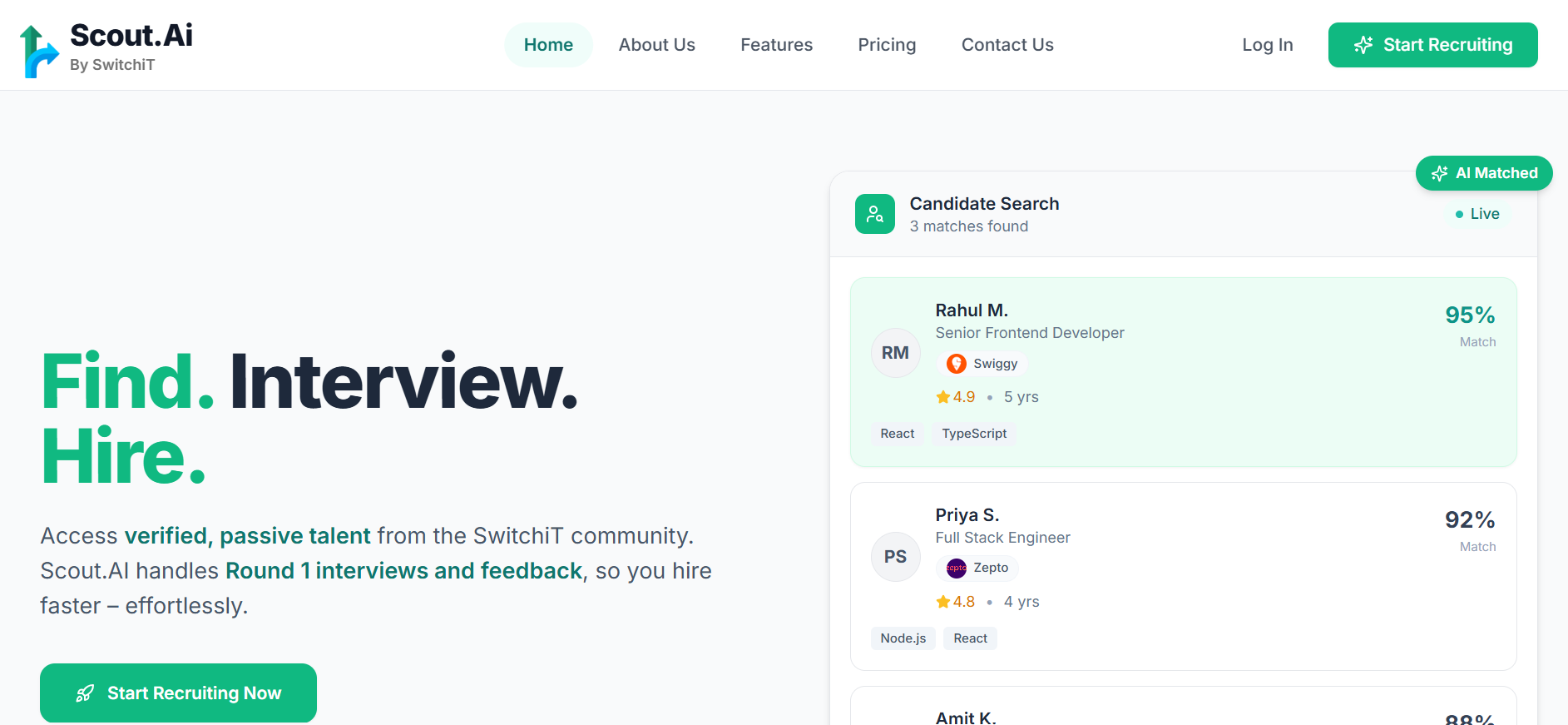
Scout AI is another emerging player in the AI recruiting space, helping teams identify and engage qualified candidates more quickly.
The platform leverages AI-driven search and matching capabilities to streamline candidate discovery and improve sourcing outcomes.
Recruiters can spend less time searching through profiles and more time connecting with high-potential talent.
Scout AI also aligns with a broader trend in recruiting technology where intelligent automation is being used to improve hiring speed without sacrificing candidate quality.
For companies competing for technical talent, tools like Scout AI can help reduce sourcing challenges by surfacing relevant candidates faster and providing recruiters with more actionable hiring insights.
As the recruiting technology market continues to evolve, Scout AI represents the growing movement toward AI-assisted talent acquisition workflows that support both efficiency and hiring effectiveness.
Suggested Reading:
9 AI Recruiting Tools That Replace Manual Hiring WorkflowsHow to Choose the Right AI Recruiting Tool for Your Team
Choosing the right AI recruiting tool depends heavily on how your team hires today and where the biggest bottlenecks exist.
Different teams need different levels of automation, sourcing depth, and workflow integration, so it’s important to match the tool to your specific hiring environment.
1. For recruitment agencies
If you run a recruitment agency, focus on tools that improve sourcing speed and outreach efficiency.
Agencies typically manage multiple roles at once, so platforms with strong multi-client workflows, candidate pipelines, and automated outreach help scale operations without increasing workload.
You should prioritize tools that support bulk sourcing, candidate tracking, and fast turnaround times.
2. For startup hiring teams
Startups often operate with small teams and limited recruiting resources. The right AI tool should reduce manual effort while still giving control over hiring decisions.
Look for platforms that combine sourcing, screening, and scheduling in one place so your team can move quickly from job posting to interviews without switching between systems.
3. For high-volume recruiting
High-volume hiring requires strong automation and candidate management capabilities. Tools that can screen large applicant pools, automate responses, and rank candidates quickly are essential.
The goal is to maintain speed without losing visibility into candidate quality.
4. For technical and engineering hiring
Technical roles require more precise matching based on skills and experience. Choose AI recruiting tools that understand technical requirements and can evaluate candidates beyond surface-level keywords.
AI-driven scoring, skill-based filtering, and accurate job matching become especially important here.
5. For teams looking to automate outreach
If your biggest challenge is candidate engagement, prioritize tools with strong outreach automation.
Look for features like personalized messaging, automated follow-ups, and multi-channel communication that help maintain consistent candidate interaction without increasing recruiter workload.
Suggested Reading:
How to Set Up Recruiting Email Automation for Faster Hiring ProcessCommon Mistakes to Avoid When Using AI in Recruiting
AI recruiting tools can significantly improve speed and efficiency, but they still require thoughtful usage.
When teams rely too heavily on automation without proper strategy, it can negatively impact hiring quality and candidate experience.
1. Relying entirely on automation
One of the most common mistakes is expecting AI to handle the entire hiring process without human involvement.
While AI can automate sourcing, screening, and outreach, final hiring decisions still require human judgment to assess cultural fit and nuanced candidate strengths.
2. Using poor candidate data
AI systems are only as good as the data they process. If job descriptions or candidate profiles are incomplete or unclear, matching accuracy drops significantly.
Clean, well-structured data leads to better recommendations and more relevant candidates.
3. Sending generic outreach messages
Automation makes it easy to send messages at scale, but generic communication often leads to low response rates.
Personalized outreach remains important for engaging passive candidates and improving conversion rates.
4. Ignoring recruiter-candidate relationships
AI can initiate conversations, but relationships still drive hiring success.
Teams that over-automate without maintaining human interaction risk losing trust and engagement from strong candidates.
5. Measuring activity instead of hiring outcomes
Another common mistake is focusing on metrics like number of messages sent or candidates sourced.
Instead, teams should evaluate outcomes such as quality of hire, time-to-fill, and interview-to-offer conversion rates.
AI should be used as an enabler, not a replacement, for thoughtful recruiting practices.
Conclusion
AI recruiting tools are reshaping how teams source, evaluate, and engage technical talent. From faster candidate discovery to automated outreach and smarter matching, these platforms help recruiters move with more speed and precision.
However, the real value comes from using AI as an assistive layer, not a replacement for human judgment.
As the tools continue to evolve, the teams that combine automation with thoughtful hiring practices will see the biggest gains in quality, efficiency, and time-to-hire.
Frequently Asked Questions
What are AI sourcing tools?
AI sourcing tools automatically find, filter, and rank candidates across platforms using intelligent algorithms and data-driven matching.
Can AI help recruit software engineers faster?
Yes, AI quickly identifies qualified engineers, ranks profiles, and automates outreach, significantly reducing time-to-hire.
Are AI recruiting tools suitable for small agencies?
Yes, small agencies benefit by saving time, scaling outreach, and reducing manual sourcing workload efficiently.
Do AI recruiting tools replace recruiters?
No, AI supports recruiters by automating tasks while humans still make final hiring and relationship decisions.
Which AI recruiting tool is best for outreach automation?
Tools like Leelu.ai and similar platforms excel at personalized, automated, and scalable candidate outreach workflows.