11 Recruiter Workflow Automation Tools That Eliminate Manual Tasks

Recruiters spend countless hours on repetitive tasks like sourcing candidates, screening resumes, sending follow-ups, and scheduling interviews.
While these activities keep the hiring process moving, handling them manually can slow down recruitment and limit productivity.
That's why recruiter workflow automation tools are becoming essential for modern hiring teams. They help reduce administrative work, improve consistency, and accelerate hiring outcomes.
In this guide, you'll learn:
- Which recruiting tasks can be automated
- The best recruiter workflow automation tools
- How to choose the right solution for your team
Common Recruiting Tasks That Are Ready for Automation
Recruiting has become more complex than ever. Hiring teams are expected to move faster, engage candidates consistently, and manage growing applicant volumes without increasing workload.
The challenge is that many recruiting processes still rely heavily on manual work. This is where workflow automation creates the biggest impact.
1. The Hidden Cost of Manual Recruiting Tasks
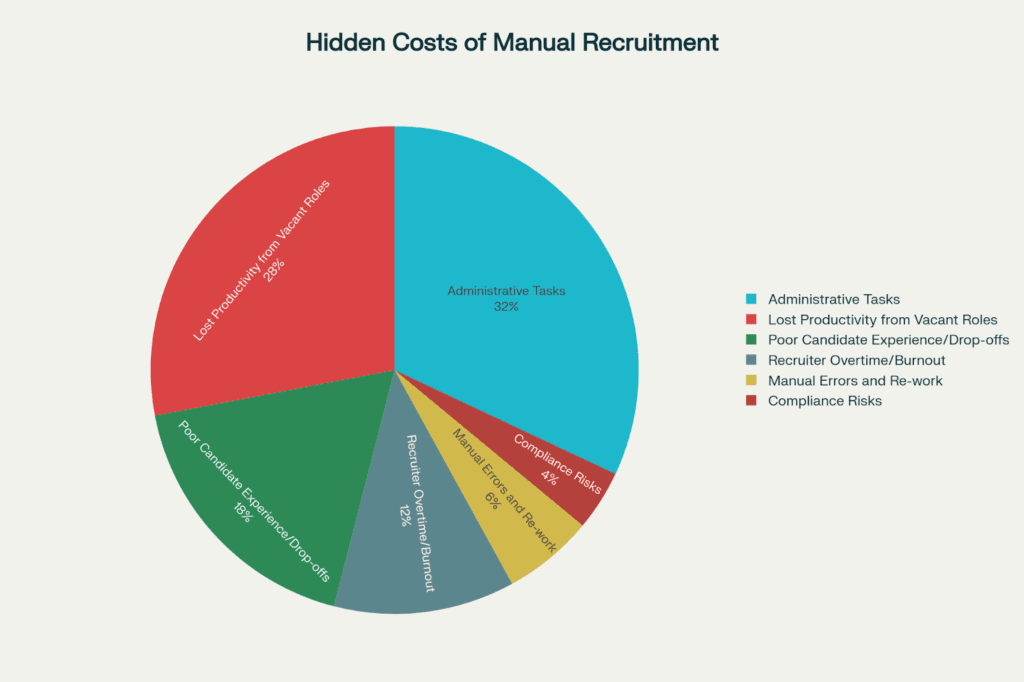
Manual recruiting tasks often seem manageable on their own.
However, when recruiters spend hours sourcing candidates, screening resumes, sending follow-ups, and coordinating interviews, the cumulative impact becomes significant.
These repetitive activities reduce the time available for strategic work such as building candidate relationships, improving employer branding, and making better hiring decisions.
Over time, manual processes can also increase the risk of delays, communication gaps, and inconsistent candidate experiences.
2. Where Most Recruiters Lose Time Every Week
Recruiters rarely lose time in one single activity.
Instead, small administrative tasks add up throughout the week.
Common time-consuming activities include:
- Searching across multiple sourcing platforms
- Reviewing large volumes of resumes
- Sending outreach and follow-up messages
- Scheduling interviews with candidates and hiring managers
- Updating ATS records and candidate statuses
While each task may only take a few minutes, repeating them hundreds of times can consume a large portion of a recruiter's workweek.
3. How Workflow Automation Improves Hiring Speed and Consistency
Workflow automation removes many of these repetitive steps by allowing technology to handle routine tasks automatically.
Instead of manually moving candidates through each stage, recruiters can create automated workflows that trigger actions based on predefined conditions.
This helps reduce delays, maintain consistent communication, and ensure every candidate follows a structured hiring process.
As a result, hiring teams can fill roles faster while delivering a better candidate experience.
Suggested Reading:
Candidate Sourcing ChannelsWhat to Look for in a Recruiter Workflow Automation Tool
Not all automation platforms offer the same capabilities.
Before investing in a solution, it's important to understand which features will deliver the greatest value to your recruiting process.
1. End-to-End Workflow Coverage
The most effective tools automate multiple stages of the hiring journey rather than solving a single problem.
Look for platforms that support sourcing, screening, outreach, interview scheduling, and pipeline management within one workflow.
This reduces the need to switch between multiple systems and creates a more efficient hiring process.
2. Integration With Existing Recruiting Systems
Automation should simplify your workflow, not create additional complexity.
A strong automation platform should integrate seamlessly with your ATS, HR software, calendars, communication tools, and sourcing platforms.
This ensures information flows automatically between systems without requiring manual updates.
3. Customizable Automation Workflows
Every organization follows a different hiring process.
That's why flexibility is essential when evaluating recruiter workflow automation tools.
The best solutions allow you to customize workflows, triggers, approval steps, and communication sequences based on your team's specific requirements.
4. Reporting and Performance Visibility
Automation becomes even more valuable when you can measure its impact.
Look for tools that provide visibility into recruiting performance, pipeline health, response rates, and hiring efficiency.
These insights help you identify bottlenecks, optimize workflows, and make more informed hiring decisions over time.
11 Best Recruiter Workflow Automation Tools
Recruiting teams spend a significant amount of time managing repetitive tasks across sourcing, screening, outreach, scheduling, and reporting.
The right recruiter workflow automation tool can reduce this workload while helping your team move candidates through the hiring process more efficiently.
Below are some of the most popular recruiting automation platforms available today.
1. Leelu AI
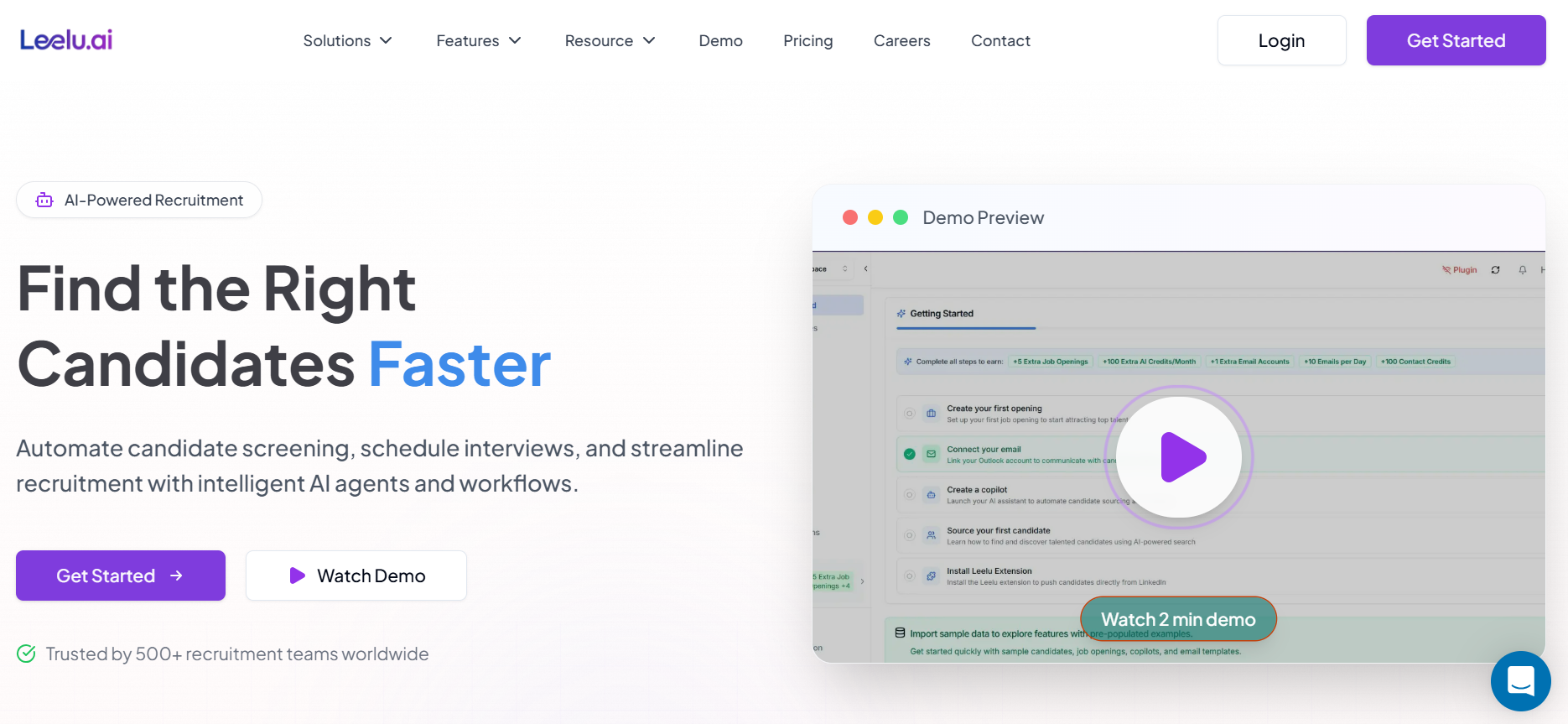
Recruiting often requires multiple tools to handle sourcing, screening, outreach, scheduling, and candidate management.
Leelu.AI brings these activities together in a single platform, helping recruiters automate large parts of the hiring workflow from start to finish.
Key Features
- AI-powered candidate sourcing across multiple platforms
- Access to 500M+ candidate profiles
- Automated resume parsing and candidate scoring
- AI-powered candidate matching
- Personalized outreach automation
- Automated follow-ups and candidate engagement
- Smart interview scheduling
- ATS integrations and workflow syncing
- Recruiting analytics and performance dashboards
Manual Tasks It Eliminates
- Searching for candidates across multiple databases
- Reviewing resumes one by one
- Ranking candidates manually
- Sending repetitive outreach messages
- Following up with candidates individually
- Coordinating interview schedules
- Updating ATS records manually
2. Greenhouse

Greenhouse is a well-known applicant tracking system designed to help organizations build structured and scalable hiring processes.
Its automation features help reduce administrative work while improving hiring consistency.
Key Features
- Interview workflow automation
- Candidate scorecards
- Structured hiring processes
- Automated candidate stage management
- Reporting and recruiting analytics
Manual Tasks It Eliminates
- Moving candidates between stages
- Collecting hiring team feedback
- Tracking interview progress
- Managing recruiting workflows
- Generating hiring reports
3. Lever

Lever combines applicant tracking and candidate relationship management to help recruiting teams manage hiring and talent nurturing from one platform.
It is particularly useful for organizations focused on long-term talent engagement.
Key Features
- ATS and CRM functionality
- Candidate nurturing campaigns
- Automated workflows
- Pipeline management tools
- Interview scheduling capabilities
- Recruiting analytics
Manual Tasks It Eliminates
- Manual follow-up emails
- Talent pipeline maintenance
- Candidate communication tracking
- Interview coordination
- Recruitment reporting activities
4. Ashby

Ashby is designed for organizations that want advanced recruiting operations, workflow automation, and detailed hiring analytics.
Its flexible workflow capabilities make it a strong option for scaling teams.
Key Features
- Automated recruiting workflows
- Custom pipeline management
- Interview scheduling tools
- Recruiting dashboards
- Advanced reporting and analytics
Manual Tasks It Eliminates
- Candidate stage tracking
- Workflow management activities
- Manual recruiting reports
- Scheduling administration
- Hiring performance analysis
5. Gem
Gem focuses on sourcing automation and candidate relationship management.
It helps recruiters build talent pipelines while reducing the effort required to engage and nurture candidates.
Key Features
- Talent sourcing automation
- Candidate engagement sequences
- Recruiting CRM functionality
- Analytics dashboards
- ATS integrations
Manual Tasks It Eliminates
- Candidate prospecting
- Outreach campaign management
- Follow-up communication
- Talent pipeline organization
- Candidate engagement tracking
6. Loxo

As recruiting teams grow, managing sourcing, outreach, and candidate relationships across multiple platforms can become difficult.
Loxo simplifies this process by combining sourcing, CRM, ATS functionality, and automation tools in one system.
Key Features
- AI-powered talent sourcing
- Recruiting CRM
- Applicant tracking system
- Automated outreach campaigns
- Candidate engagement tracking
- Workflow automation tools
Manual Tasks It Eliminates
- Searching multiple candidate databases
- Maintaining separate CRM records
- Sending outreach messages individually
- Tracking candidate engagement manually
- Updating candidate profiles across systems
7. SeekOut

Finding qualified candidates is often one of the most time-consuming parts of recruiting.
SeekOut helps automate talent discovery by giving recruiters access to extensive candidate databases and advanced search capabilities.
Key Features
- AI-powered candidate sourcing
- Advanced talent search filters
- Diversity recruiting tools
- Talent pool management
- Candidate insights and analytics
Manual Tasks It Eliminates
- Manual candidate research
- Candidate database searches
- Talent pipeline organization
- Initial candidate qualification reviews
- Sourcing performance reporting
8. Paradox

Candidate communication can quickly become overwhelming when recruiters are managing hundreds of applicants simultaneously.
Paradox uses conversational AI to automate candidate interactions and streamline communication workflows.
Key Features
- AI recruiting assistant
- Automated candidate conversations
- Interview scheduling automation
- Screening workflow automation
- Candidate engagement tools
Manual Tasks It Eliminates
- Responding to common candidate questions
- Initial screening conversations
- Scheduling interviews
- Sending follow-up communications
- Providing application status updates
9. Metaview
Interview notes are essential for effective hiring decisions.
However, manually taking notes during interviews can distract recruiters and hiring managers from the conversation itself.
Metaview automates interview documentation and provides insights that support better hiring decisions.
Key Features
- Automated interview note generation
- Interview summaries
- Conversation intelligence
- ATS integrations
- Team collaboration tools
Manual Tasks It Eliminates
- Writing interview notes manually
- Creating candidate summaries
- Sharing interview feedback
- Tracking interview discussion points
- Consolidating evaluation data
10. Calendly

Interview scheduling is one of the most repetitive recruiting tasks.
Coordinating availability between candidates, recruiters, and hiring managers often leads to unnecessary delays.
Calendly automates this process and makes scheduling significantly easier.
Key Features
- Automated scheduling links
- Calendar synchronization
- Availability management
- Team scheduling capabilities
- Automated reminders
Manual Tasks It Eliminates
- Back-and-forth scheduling emails
- Availability checks
- Meeting confirmations
- Reminder communications
- Schedule coordination between stakeholders
11. Zapier
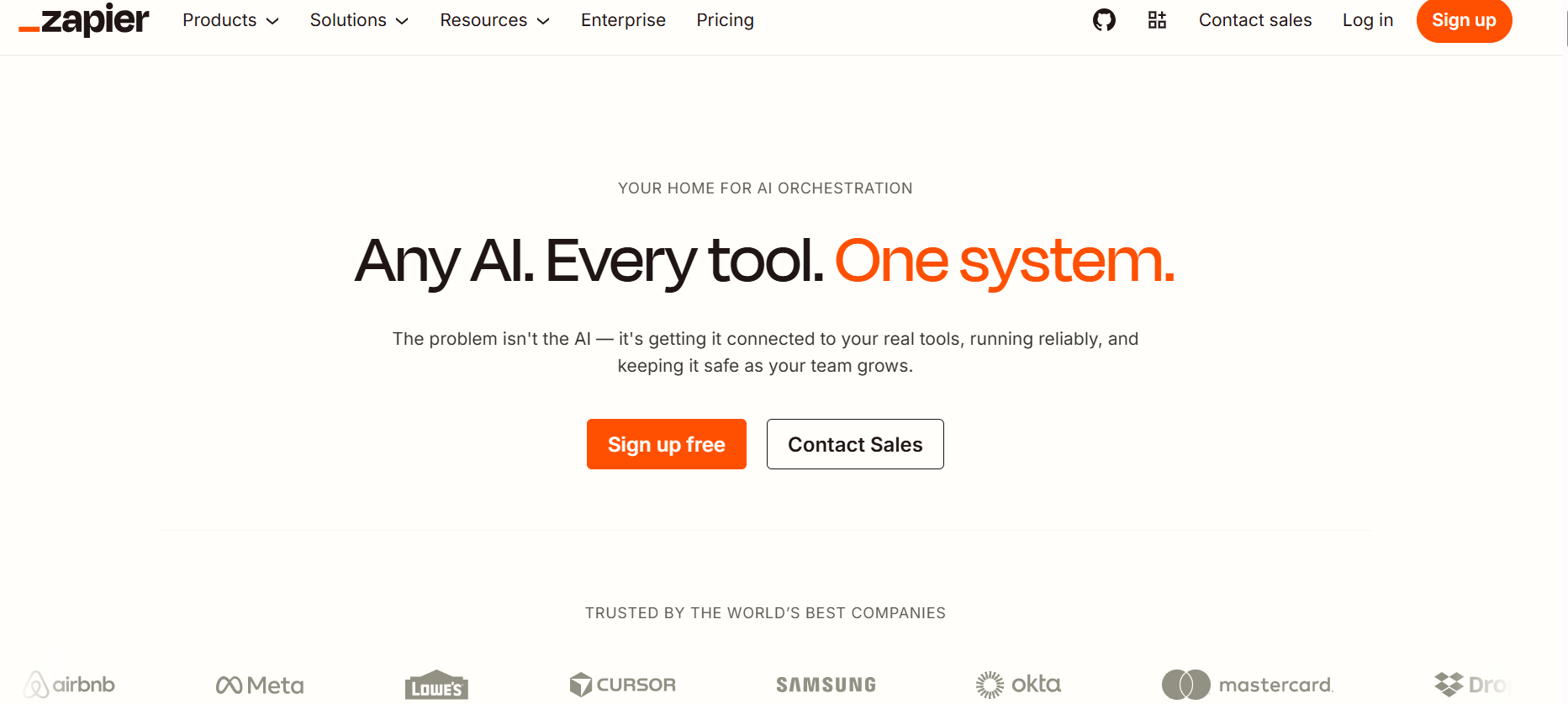
Many recruiting teams use multiple platforms throughout their hiring process.
The challenge is ensuring those systems work together without creating additional manual work.
Zapier solves this problem by connecting applications and automating repetitive workflows between them.
Key Features
- No-code workflow automation
- Thousands of app integrations
- Automated task triggers
- Data synchronization
- Custom workflow creation
Manual Tasks It Eliminates
- Copying candidate information between tools
- Updating records across systems
- Sending workflow notifications
- Triggering repetitive administrative actions
- Managing data transfers manually
How to Choose the Right Recruiter Workflow Automation Tool

With so many recruiter workflow automation tools available, choosing the right one can feel overwhelming.
The best solution isn't necessarily the one with the most features. It's the one that solves your biggest recruiting challenges and fits your hiring process.
Identify Your Biggest Recruiting Bottlenecks
Start by looking at where your team spends the most time.
Some organizations struggle with candidate sourcing, while others face challenges with screening, outreach, interview scheduling, or pipeline management.
Identifying these bottlenecks will help you focus on tools that deliver the greatest impact.
Prioritize Tools That Eliminate Multiple Manual Tasks
Automation delivers the most value when it removes several repetitive tasks at once.
Instead of adopting separate solutions for sourcing, outreach, scheduling, and candidate management, look for platforms that automate multiple stages of the hiring process.
This can simplify workflows and reduce tool complexity.
Evaluate Integration and Scalability Requirements
Any automation platform should work seamlessly with your existing recruiting technology stack.
Consider whether the tool integrates with your ATS, communication platforms, calendars, and HR systems.
It's also important to choose a solution that can scale as hiring volumes increase.
Measure Time Saved and Hiring Efficiency
The success of any automation tool should be measured by results.
Track metrics such as time-to-hire, recruiter productivity, candidate response rates, and administrative hours saved.
The right recruiter workflow automation tool should not only reduce manual work but also help your team hire faster and more efficiently.
Suggested Reading:
Recruitment Automation: Step-by-Step Guide for HR’sConclusion
Recruiting teams can no longer afford to spend valuable time on repetitive administrative work.
Recruiter workflow automation tools help streamline sourcing, screening, outreach, scheduling, and candidate management, allowing recruiters to focus on building relationships and making better hiring decisions.
Whether you need end-to-end hiring automation or support for specific recruiting tasks, the right platform can significantly improve efficiency and consistency.
By identifying your biggest bottlenecks and choosing a solution that aligns with your hiring goals, you can reduce manual effort and create a faster, more effective recruitment process.
Frequently Asked Questions
1. What is recruiter workflow automation?
Recruiter workflow automation uses software to automate repetitive hiring tasks such as sourcing, screening, outreach, interview scheduling, and candidate management.
2. Which recruiting tasks can be automated?
Recruiters can automate candidate sourcing, resume screening, email outreach, follow-ups, interview scheduling, candidate tracking, reporting, and ATS updates.
3. Can workflow automation improve candidate experience?
Yes, automation helps maintain faster communication, timely follow-ups, and smoother scheduling, creating a more consistent and positive candidate experience.
4. Do recruiter automation tools work with ATS platforms?
Most recruiter automation tools integrate with popular ATS platforms, allowing candidate data, workflows, and hiring activities to sync automatically.
5. How do recruiters choose the right workflow automation tool?
Recruiters should evaluate their biggest hiring bottlenecks, integration needs, scalability requirements, and the amount of manual work the tool can eliminate.