Top 7 Talent Sourcing Platforms to Build Strong Candidate Pipelines
Hiring today often feels reactive and slow, especially when you depend only on active applicants.
You end up chasing roles instead of building a steady flow of qualified candidates ready when you need them.
In this guide, you will learn:
- How talent sourcing platforms help you build stronger candidate pipelines
- Which platforms are worth considering based on your hiring needs
- How to choose the right tool without adding more complexity to your workflow
Key Features to Look for in Talent Sourcing Platforms
Now that you understand why talent sourcing platforms matter, the next step is knowing what actually makes one effective.
Because not all platforms help you build strong pipelines, and choosing the wrong one can slow you down instead of improving your hiring process.
Multi-Platform Candidate Search
A strong platform should not limit you to a single database or job board.
Instead, it should pull candidates from multiple sources like job boards, professional networks, and internal databases, giving you a wider and more diverse talent pool.
This matters because great candidates are scattered across platforms, and relying on just one source means you are automatically missing out on qualified talent.
AI-Powered Candidate Matching
Manually going through hundreds of profiles is not just time-consuming, it also leads to inconsistent shortlisting.
This is where AI-powered matching makes a real difference by automatically ranking candidates based on how well they fit your job requirements.
As a result, you can focus only on the most relevant profiles, which improves both your speed and the overall quality of your candidate shortlist.
Outreach and Engagement Automation
Sourcing does not end when you find the right candidates, it only works when those candidates actually respond.
Good platforms help you automate outreach, follow-ups, and even replies, so you can stay consistent without increasing your workload.
This ensures candidates stay engaged throughout the process instead of dropping off due to delayed communication or missed follow-ups.
Pipeline Management and Analytics
Finding candidates is only one part of the process, managing them effectively is what builds a strong pipeline over time.
A reliable platform helps you track candidates across different stages while also giving you insights into what is working and what is not.
These insights help you refine your sourcing strategy, improve decision-making, and create a more predictable and efficient hiring process.
Top 7 Talent Sourcing Platforms to Build Strong Candidate Pipelines
Now that you know what features actually matter, the next step is choosing platforms that bring those capabilities together in a practical way.
Because the right tool does not just help you source candidates, it helps you consistently build and manage a pipeline that is ready when hiring demand increases.
1 Leelu AI for End-to-End Talent Sourcing Automation
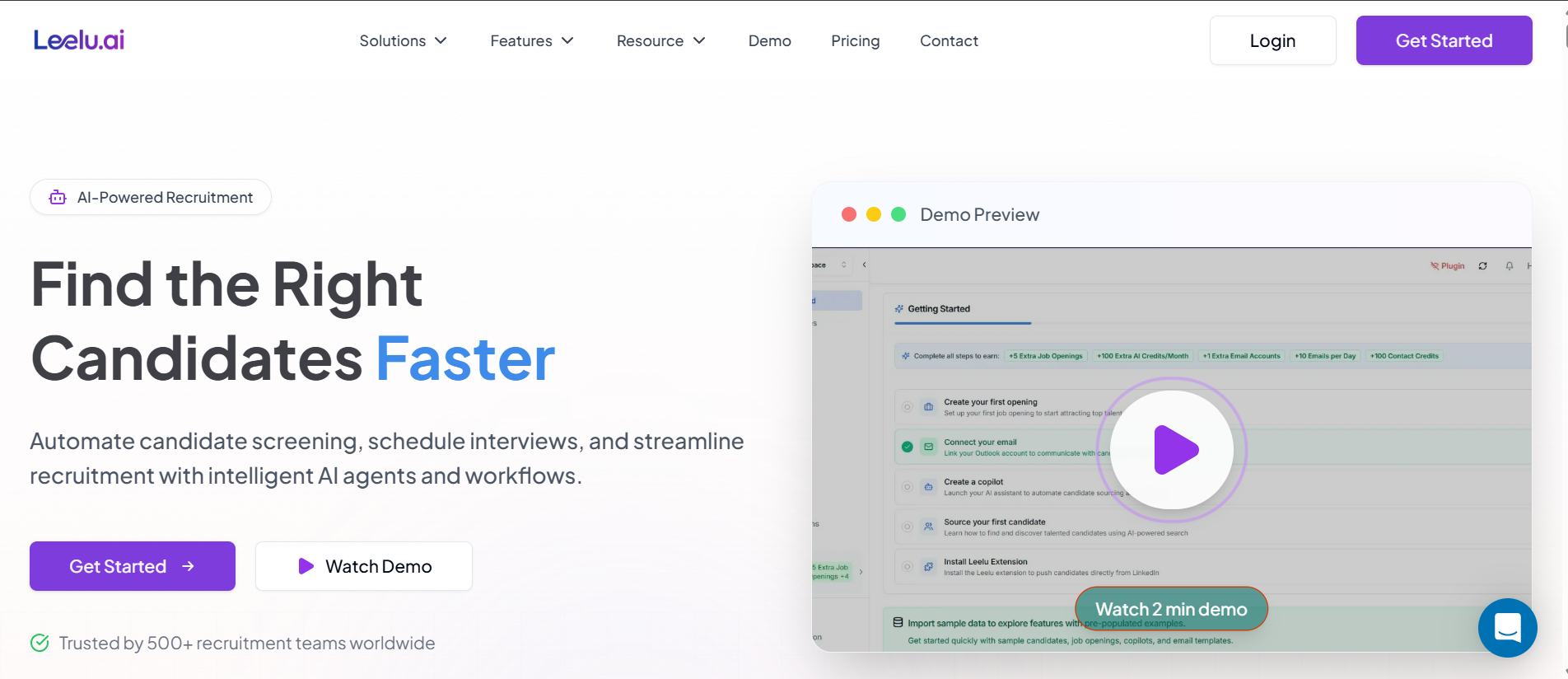
Hiring often slows down when you are juggling sourcing, outreach, and scheduling across different tools and manual processes.
Leelu AI simplifies this by acting as an AI recruiting copilot that automates the entire workflow, helping you move from job post to first interview faster while building a stronger and more consistent candidate pipeline.
Instead of reacting to every new role, you can continuously source, engage, and move candidates forward across platforms like LinkedIn, job boards, and ATS systems in one unified system.
How Leelu AI Helps Build Strong Candidate Pipelines
To build a strong pipeline, you need both reach and consistency, not just one-time sourcing efforts.
Leelu AI gives you access to 500M+ candidate profiles across multiple platforms, ensuring you never miss out on quality talent that is spread across different sources.
Once candidates are sourced, the platform uses AI to screen and rank 1000+ resumes in minutes, helping you quickly focus on high-fit profiles with up to 90% matching accuracy.
Engagement is where most pipelines break, but Leelu helps you stay consistent by enabling:
- 100–300 personalized outreaches per day across email and LinkedIn
- 24/7 automated follow-ups and responses, so candidates do not drop off
- 40–60% response rates, improving overall pipeline conversion
On top of that, it removes coordination delays by allowing you to schedule interviews in under 1 minute with calendar sync, helping you move candidates through stages faster.
The result is a pipeline that is not just full, but actively moving, allowing you to go from job post to interview in as little as 24 hours.
Key Features That Strengthen Your Pipeline
When you look at pipeline building, these features directly impact speed, scale, and quality:
- Access 500M+ candidate profiles across LinkedIn, job boards, and ATS
- AI-powered screening and ranking of 1000+ resumes within minutes
- High-scale outreach with 100–300 personalized messages per day
- Automated 24/7 follow-ups to maintain candidate engagement
- Interview scheduling in <1 minute with calendar integration
- Integration with 10+ platforms, including major ATS systems
Together, these features help you replace fragmented workflows with a single, structured system.
Pros
- Reduce hiring effort by 70–85% with end-to-end automation
- Move from job post to first interview in ~24 hours
- Improve response rates by 40–60% with personalized outreach
- Scale hiring without increasing team size or adding more tools
- Manage your entire candidate pipeline in one unified platform
Cons
- Initial setup takes time to properly configure workflows
- Advanced features may feel overwhelming if you are new to AI tools
- Requires ongoing optimization to fully unlock automation benefits
Pricing and When to Use Leelu AI
Choosing the right platform depends on how complex and scalable your hiring needs are.
Leelu AI is ideal when you want to move beyond reactive hiring and build a predictable, always-on pipeline without increasing manual effort.
Pricing is structured to support different team sizes:
- Starts at $79/month for small teams with basic AI features
- Growth plans range from $149–$499/month with advanced automation and integrations
- Enterprise pricing is custom, typically ₹50,000+ per month ($600+) based on hiring scale
- Includes a 14-day free trial to test full capabilities before committing
If your goal is to combine sourcing, screening, outreach, and scheduling into one system while improving speed and candidate quality, this kind of structured automation becomes a clear advantage.
2 LinkedIn Recruiter for Professional Talent Sourcing
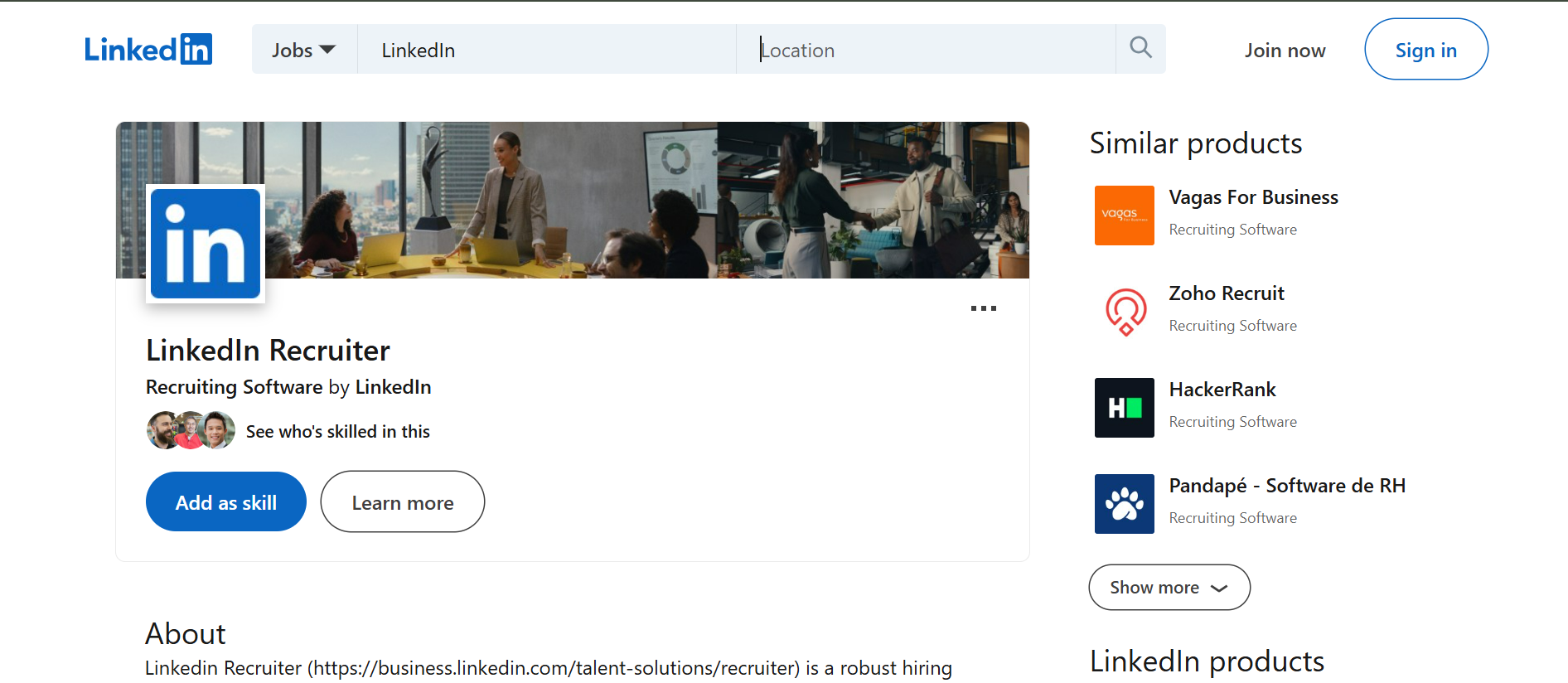
When it comes to sourcing professional talent, especially for mid to senior-level roles, you need access to a large and reliable candidate network.
LinkedIn Recruiter helps you tap into one of the largest professional databases, allowing you to find both active job seekers and passive candidates who are not applying but are open to the right opportunity.
The platform stands out because of its advanced search capabilities, where you can filter candidates based on experience, skills, location, company background, and even intent signals.
It also allows you to directly reach out through InMail, making it easier to start conversations and build early-stage pipelines without waiting for applications.
Best Use Cases and Limitations
While LinkedIn Recruiter is powerful, it works best when you use it as part of a broader sourcing strategy rather than your only channel.
It is especially effective for:
- Hiring for white-collar, professional, and leadership roles
- Reaching passive candidates who are not active on job boards
- Building targeted talent pools using detailed filters
However, there are some limitations you should consider:
- High cost compared to other sourcing platforms
- Increasing competition, as most recruiters are using the same talent pool
- Response rates can vary depending on outreach quality and candidate saturation
- Limited automation, which means more manual effort for outreach and follow-ups
To get the most out of LinkedIn Recruiter, you should use it strategically alongside other tools, ensuring you are not relying on a single platform to build your entire candidate pipeline.
Suggested Reading:
LinkedIn Recruiter Alternatives3 Indeed Resume Database for High-Volume Hiring
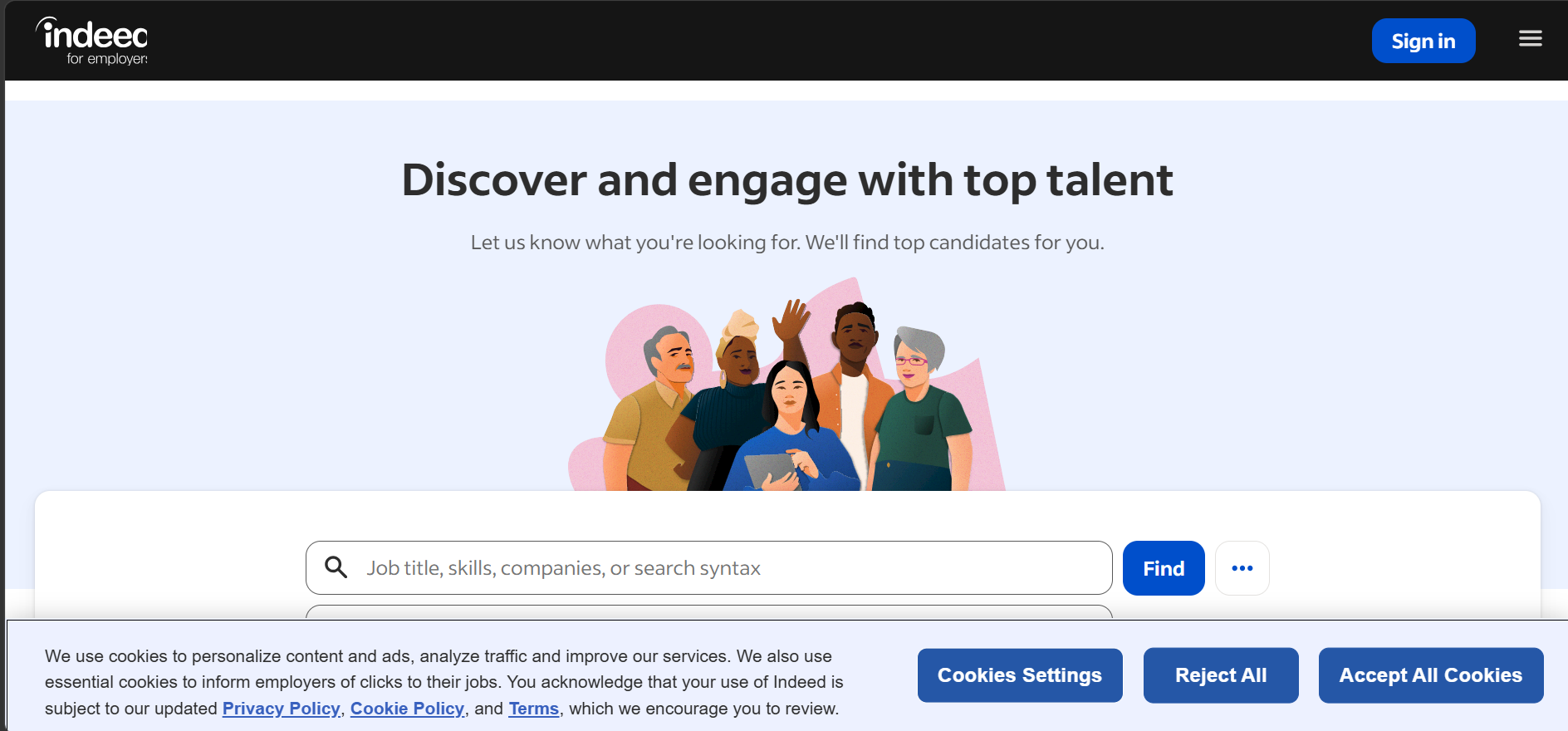
When hiring depends on speed and volume, you need quick access to a large pool of candidates across roles and experience levels.
Indeed Resume Database helps you search millions of resumes, identify active candidates fast, and fill multiple roles quickly while keeping your pipeline consistently active.
Best Use Cases and Limitations
Indeed becomes most effective when your priority is hiring at scale while maintaining a consistent flow of candidates.
It is particularly useful for:
- High-volume hiring across entry-level and mid-level roles
- Roles that require quick turnaround and faster closures
- Building a large candidate pool quickly across industries
However, with higher volume often comes the need for better filtering and qualification.
Some limitations to consider:
- Candidate quality can vary, requiring extra screening effort
- Limited advanced filtering compared to niche platforms
- Higher volume can lead to noise in your pipeline if not managed well
- Less effective for highly specialized or senior roles
To get better results, you need to combine Indeed with strong screening processes or tools that help you filter and prioritize candidates efficiently, ensuring your pipeline stays both full and relevant.
4 HireEZ for AI-Based Candidate Sourcing
If manual sourcing is taking too much time, you need a platform that can automate and streamline the process.
HireEZ uses AI to source candidates across multiple platforms while also helping you rediscover past candidates from your existing database, reducing repetitive effort.
It allows you to build pipelines faster by combining automation with smarter search and candidate recommendations.
Best Use Cases and Limitations
HireEZ works best when you want to reduce manual sourcing and make better use of existing candidate data.
It is especially useful for:
- Automating sourcing across multiple platforms
- Rediscovering past candidates from ATS or CRM
- Improving sourcing efficiency with AI recommendations
However, there are a few limitations to keep in mind:
- Requires integration with existing systems for full value
- Automation still needs human validation for quality decisions
- May not fully replace hands-on sourcing for niche roles
Using it effectively means balancing automation with recruiter judgment.
5 SeekOut for Niche and Diverse Talent Search
When your hiring requires specialized skills or diversity-focused sourcing, broad platforms may not be enough.
SeekOut helps you go deeper by offering advanced search filters and access to niche talent pools, making it easier to find candidates who are often harder to reach.
This makes it a strong option when your focus is on building more targeted and inclusive candidate pipelines.
Best Use Cases and Limitations
SeekOut adds the most value when you are hiring for roles that require precision rather than volume.
It is particularly useful for:
- Sourcing niche or hard-to-fill roles
- Building diverse and inclusive pipelines
- Finding candidates beyond traditional platforms
Some limitations to consider:
- Higher cost compared to general sourcing tools
- More value in niche hiring than high-volume roles
- Often needs to be combined with broader platforms for scale
It works best as a complementary tool rather than a standalone solution.
6 AmazingHiring for Tech Talent Sourcing
Hiring developers and technical talent often requires deeper insights than what traditional resumes provide.
AmazingHiring aggregates data from platforms like GitHub and Stack Overflow, helping you understand a candidate’s real technical contributions and expertise.
This gives you a more complete view of candidates beyond just their job titles or resumes.
Best Use Cases and Limitations
AmazingHiring is most effective when your hiring is focused on technical roles.
It is especially useful for:
- Sourcing developers and engineering talent
- Evaluating technical skills through public contributions
- Building stronger technical candidate pipelines
However, there are clear limitations:
- Limited use outside technical hiring
- Not ideal for non-engineering roles
- Needs to be combined with general sourcing tools for full coverage
It works best as a specialized tool within a broader sourcing strategy.
Suggested Reading:
How to Source Candidates from Job Portals7 Gem for CRM-Based Candidate Engagement
Sourcing candidates is only one part of pipeline building, keeping them engaged over time is what makes the difference.
Gem focuses on candidate relationship management, helping you track interactions, manage outreach, and nurture candidates across your hiring funnel.
This makes it easier to build long-term relationships instead of starting from scratch for every new role.
Best Use Cases and Limitations
Gem fits best when your focus is on engagement and pipeline nurturing rather than just sourcing.
It is particularly useful for:
- Managing long-term candidate relationships
- Tracking outreach and engagement history
- Improving consistency in communication
Some limitations to consider:
- Does not replace sourcing platforms
- Works best when combined with sourcing tools
- More focused on engagement than discovery
It is most effective as a layer on top of your sourcing stack, helping you maintain a stronger and more responsive pipeline over time.
How to Choose the Right Talent Sourcing Platform
Now that you have explored different talent sourcing platforms, the next step is choosing one that actually fits your hiring needs.
Because the right platform should not just add features, it should simplify your workflow and help you build a pipeline that scales with your hiring goals.
Define Your Hiring Goals First
Before selecting any platform, you need clarity on what you are trying to achieve with your hiring process.
Are you hiring at scale, filling niche roles, or building long-term candidate pipelines that stay active even when you are not hiring immediately?
This clarity helps you choose a platform that aligns with your priorities instead of picking one that looks good but does not solve your actual problem.
Evaluate Based on Workflow Fit
A platform may have powerful features, but if it does not fit into your existing workflow, it can slow you down instead of helping you.
You should look for tools that reduce manual steps, integrate with your current systems, and make your process more streamlined rather than adding extra layers of complexity.
The goal is to improve efficiency, not create more work for your team.
Consider Scalability and Automation
As your hiring needs grow, your sourcing process should be able to handle more candidates without increasing manual effort.
This is where scalability and automation become important, helping you manage larger pipelines while maintaining consistency in sourcing, outreach, and engagement.
A platform that supports automation ensures your hiring process stays efficient over time instead of becoming harder to manage as you scale.
Conclusion
Building strong candidate pipelines is not just about using more tools, it is about using the right ones in the right way.
When you combine the right platforms with a clear strategy, you can consistently source, engage, and move candidates forward without slowing down your hiring process.
By focusing on the right features, choosing tools that fit your workflow, and leveraging automation where it matters, you can turn sourcing into a predictable and scalable system.
Frequrently Asked Questions
What is the difference between talent sourcing and recruitment?
Talent sourcing focuses on finding and engaging candidates early, even before roles open.
Recruitment covers the entire hiring process, from sourcing to interviews and final selection, making sourcing the foundation of a strong pipeline.
Which talent sourcing platform is best for building candidate pipelines?
There is no single best platform, it depends on your hiring needs and goals.
Some tools are better for scale, others for niche roles, while platforms like Leelu AI focus on end-to-end automation and pipeline building.
How do talent sourcing platforms improve hiring speed?
They reduce manual work through AI matching, automation, and multi-platform search.
This helps you quickly find, engage, and move candidates to interviews without delays.
Can small teams benefit from talent sourcing platforms?
Yes, especially when resources are limited and time is critical.
Automation helps small teams handle sourcing, outreach, and follow-ups without needing a large recruitment setup.
How do you build and maintain a strong candidate pipeline?
Start with proactive sourcing instead of waiting for applications.
Then stay consistent with outreach and follow-ups to keep candidates engaged over time.