A Guide to Predictive Hiring Analytics [+11 Ways to Boost Quality Hire]
![A Guide to Predictive Hiring Analytics [+11 Ways to Boost Quality Hire]](/content/images/size/w1200/2026/04/A-Guide-to-Predictive-Hiring-Analytics_D.jpg)
Hiring the right people is getting harder, not easier.
You’re dealing with overflowing resumes, inconsistent evaluations, and decisions that often rely more on instinct than evidence. And when a bad hire happens, the cost shows up quickly in performance, time, and team morale.
That’s where predictive hiring analytics changes the game. It helps you move from guesswork to data-backed decisions, so you can identify what actually leads to successful hires.
In this guide, you’ll learn:
- What predictive hiring analytics really means
- How it improves hiring decisions using data
- 11 practical ways to boost your quality of hire
What Is Predictive Hiring Analytics
You already know that traditional hiring relies heavily on resumes, interviews, and intuition.
But those methods only show surface-level information and often miss what actually predicts success in a role.
Predictive hiring analytics takes a different approach. It uses historical hiring data, AI models, and candidate insights to forecast which applicants are most likely to perform well, stay longer, and grow within your company.
Instead of just screening candidates, you start identifying patterns. These patterns connect specific skills, experiences, and behaviors with real on-the-job outcomes, helping you make more accurate and consistent hiring decisions.
Benefits of Predictive Hiring Analytics
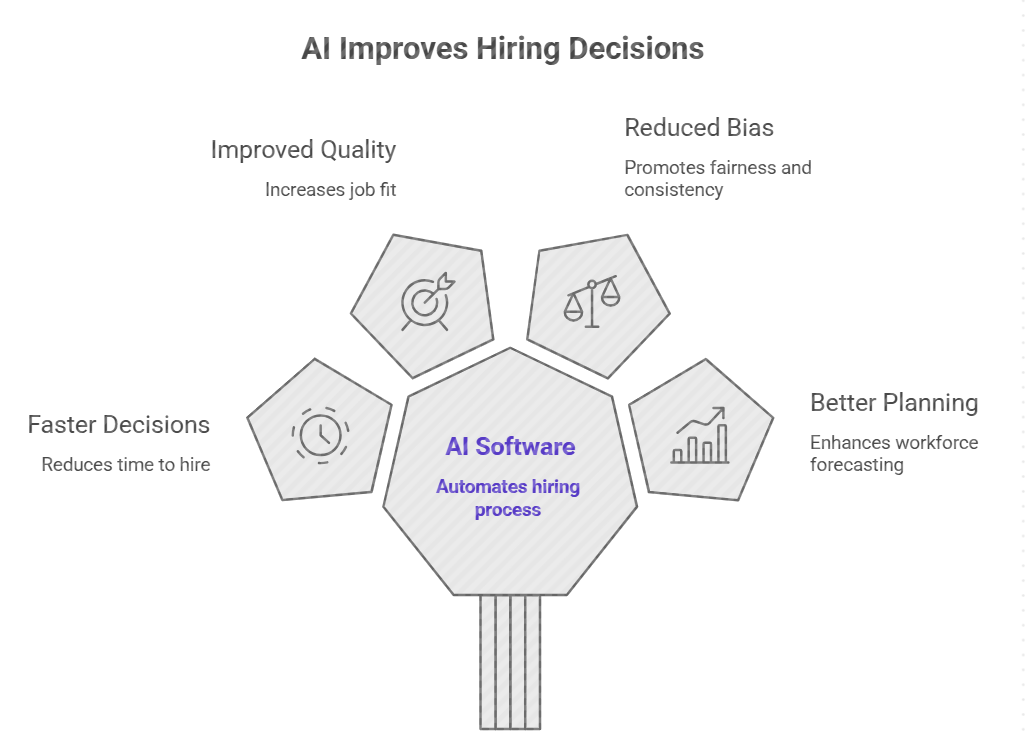
Predictive hiring analytics helps you make faster, data-backed hiring decisions, reduce bad hires, improve candidate quality, and build a more consistent, high-performing workforce over time.
1. Faster and more efficient hiring decisions
Sorting through hundreds of resumes manually slows everything down and often leads to inconsistent decisions.
Predictive hiring analytics changes that by automatically ranking candidates based on data-backed insights, so you can quickly focus on the ones most likely to succeed.
This reduces screening time, speeds up decision-making, and helps you fill roles faster without compromising on quality or accuracy.
2. Improved quality of hire and job fit
Once you start making faster decisions, the next challenge is making the right ones.
Using hiring analytics helps you do that by analyzing past performance data and identifying what success actually looks like in a role.
This allows you to match candidates more accurately, leading to better job fit, stronger performance, and lower early attrition across your team.
3. Reduced hiring bias and increased consistency
Speed and quality matter, but consistency is what makes hiring scalable.
With predictive analytics, candidates are evaluated using the same data-driven criteria, rather than subjective opinions or gut feelings.
This reduces unconscious bias, ensures fairer decisions, and helps you build a more diverse and consistently high-quality workforce.
4. Better workforce planning and forecasting
Hiring shouldn’t just react to open roles. It should anticipate them.
Predictive analytics gives you visibility into trends like attrition, growth, and skill gaps, so you can plan ahead instead of rushing to fill positions.
This helps you avoid talent shortages and align your hiring strategy with long-term business goals.
5. Higher recruiter productivity and cost efficiency
When recruiters spend hours on repetitive tasks, it limits their impact.
Predictive hiring tools automate screening and shortlisting, allowing you to focus on high-value activities like candidate engagement and decision-making.
This improves productivity, reduces hiring costs, and helps you fill roles faster without increasing effort.
Key Components of Predictive Hiring Analytics
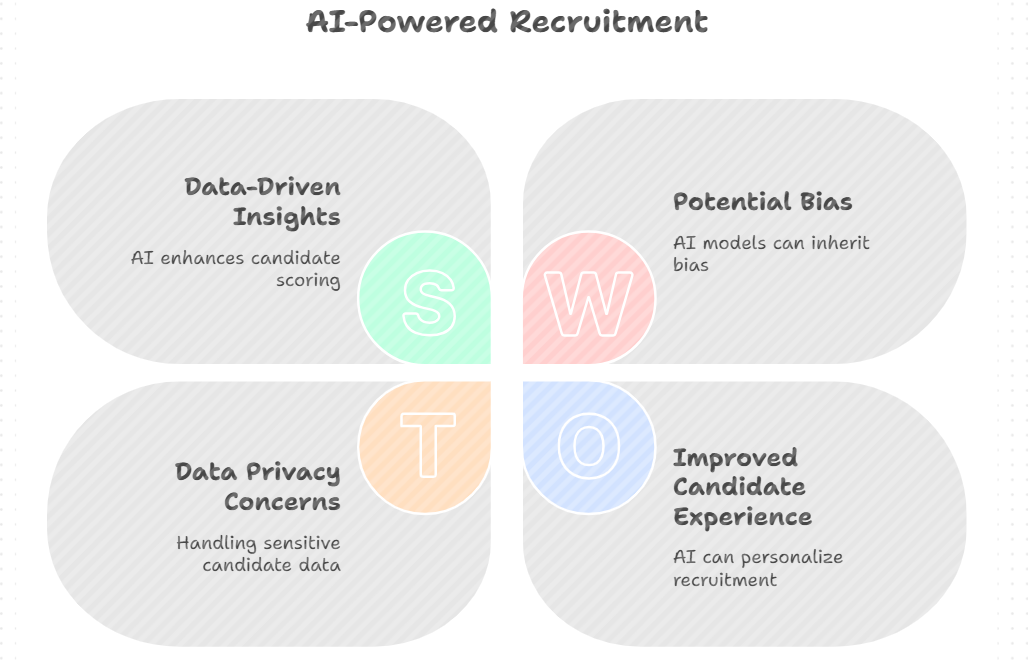
Predictive hiring analytics combines historical data, AI models, candidate insights, and performance metrics to identify patterns that predict successful hires.
1. Data collection and candidate data sources
Everything starts with the quality of your data.
Predictive hiring pulls information from resumes, assessments, interviews, and past hiring outcomes to build a complete candidate picture.
When you combine multiple data sources, your models gain the context needed to generate more accurate and actionable insights.
2. AI-driven candidate scoring and matching
Once data is collected, the next step is making sense of it.
AI models evaluate candidates based on skills, experience, and behavioral signals to assign meaningful scores.
This helps you quickly prioritize top applicants and match them to roles where they are most likely to succeed.
3. Performance prediction models
Scoring is useful, but predicting real performance is where the real value lies.
These models analyze historical employee data to uncover traits linked to success in specific roles.
By comparing candidates against these patterns, you can confidently hire people who are more likely to perform and grow.
4. Recruitment funnel analytics and insights
Even great candidates can get lost in a broken hiring process.
Funnel analytics tracks how candidates move through each stage, highlighting drop-offs and inefficiencies.
This helps you fix bottlenecks, improve candidate experience, and ensure top talent doesn’t slip away.
5. Continuous learning and optimization
Hiring needs keep evolving, and your strategy should evolve with them.
Predictive systems continuously learn from new hiring data and outcomes, refining their accuracy over time.
This ensures your hiring decisions keep improving as your business and workforce needs change.
Suggested Reading:
AI Candidate Sourcing Tools11 Ways Predictive Hiring Analytics Improves Quality of Hire
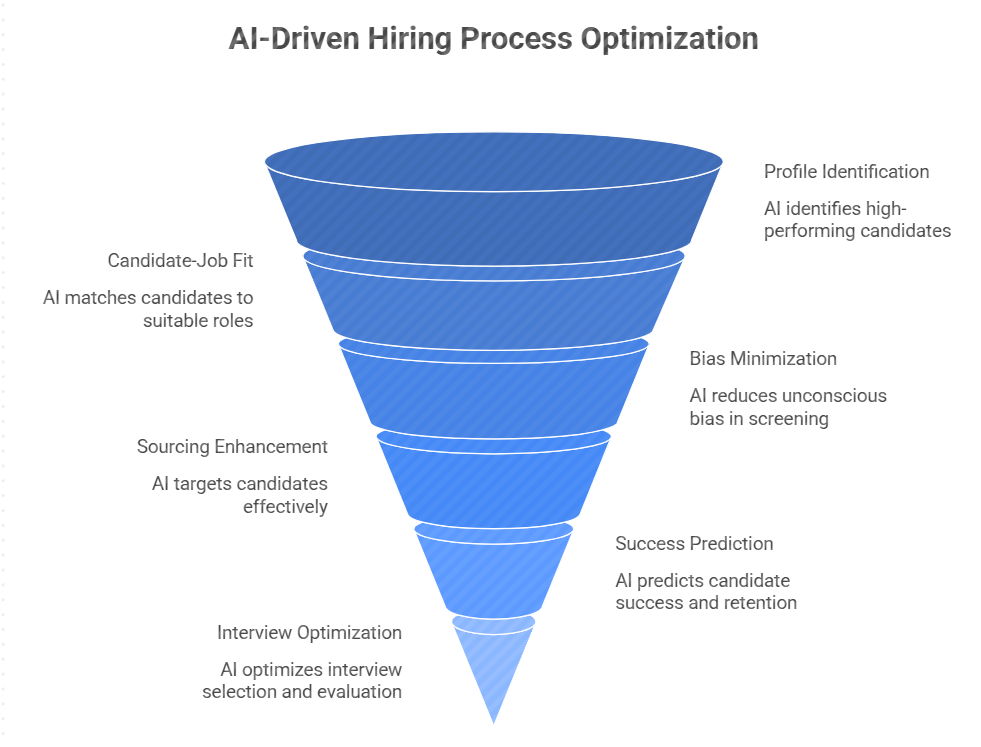
A data-driven hiring approach improves quality by enabling smarter screening, better role matching, reduced bias, and informed decisions across every hiring stage.
1. Identifying high-performing candidate profiles early
Instead of guessing who might succeed, you start with proven patterns.
Predictive analytics highlights traits of top performers using historical data, helping you spot similar candidates early.
This allows you to focus on high-potential applicants who are more likely to contribute and succeed.
2. Reducing time to hire without compromising quality
Speed often creates pressure, but it shouldn’t reduce hiring quality.
With automated screening and ranking, you can evaluate candidates faster while still relying on data-driven insights.
This helps you move quickly without sacrificing long-term employee success or decision accuracy.
3. Improving candidate-job fit using AI matching
Hiring the right person means matching more than just skills.
AI-driven matching aligns candidate experience, preferences, and capabilities with job requirements.
This leads to better job fit, higher satisfaction, improved performance, and reduced turnover.
4. Minimizing unconscious bias in screening
Bias can easily slip into hiring decisions without you noticing.
Predictive models rely on structured data instead of subjective opinions, creating a more objective evaluation process.
This promotes fairness, improves diversity, and ensures decisions are based on relevant qualifications.
5. Enhancing sourcing with data-backed targeting
Not all sourcing channels deliver the same quality of candidates.
Predictive analytics shows which sources and profiles consistently lead to successful hires.
This helps you focus your efforts on high-performing channels and avoid wasting time on ineffective outreach.
6. Predicting candidate success and retention
Hiring doesn’t end at offer letter acceptance. Long-term success matters more.
Predictive tools estimate how likely candidates are to perform well and stay in the role.
This helps you build a more stable, engaged, and high-performing workforce over time.
7. Optimizing interview selection and evaluation
Interviews should validate insights, not rely on guesswork.
Analytics helps you decide which candidates should move forward and what evaluation methods work best.
This improves consistency and ensures interviews focus on factors that truly predict success.
8. Increasing offer acceptance rates
Losing candidates at the final stage can delay hiring significantly.
Predictive insights help you identify candidates who are more likely to accept offers.
This allows you to tailor communication and offers, improving acceptance rates and reducing drop-offs.
9. Improving recruiter productivity and efficiency
Recruiters often spend too much time on repetitive tasks.
Automation handles screening and shortlisting, freeing you to focus on strategic activities.
This increases efficiency while maintaining high hiring standards across roles.
10. Enabling better workforce planning decisions
Hiring becomes more effective when it aligns with future needs.
Predictive insights help you understand upcoming talent gaps and hiring demands.
This allows you to plan proactively and hire the right people at the right time.
11. Continuously refining hiring strategies with feedback loops
Great hiring systems don’t stay static. They keep improving.
Feedback from hiring outcomes helps refine predictive models and decision-making processes.
This ensures your hiring strategy evolves and becomes more effective over time.
Suggested Reading:
Passive Candidates: How to Source & Hire Top TalentHow to Implement Predictive Hiring Analytics in Your Recruitment Process
Implement predictive hiring analytics by integrating data sources, using AI tools, tracking outcomes, and continuously refining your hiring process with insights.
1. If you are starting with limited hiring data
You don’t need massive datasets to get started. Consistency matters more.
Start by collecting structured data from your current hiring process, including resume screening, interviews, and outcomes.
Even small datasets, when tracked over time, can reveal useful patterns and gradually improve your hiring decisions.
2. If you want to improve hiring accuracy
Once you have data, the focus shifts to making better decisions.
Integrate predictive tools into your screening and matching process to validate choices with real insights.
This ensures your hiring decisions rely on measurable indicators instead of assumptions or incomplete information.
3. If you are scaling recruitment operations
As hiring volume increases, consistency becomes harder to maintain.
AI-driven platforms help automate sourcing, screening, and analytics, ensuring standardized decisions across roles.
This allows you to scale efficiently without overwhelming recruiters or compromising candidate experience.
4. If you need better visibility into hiring performance
You can’t improve what you can’t measure clearly.
Use dashboards to track metrics like time-to-hire, quality of hire, and funnel conversion rates.
This visibility helps you identify gaps, measure success, and continuously improve your recruitment strategy.
How Leelu.Ai Helps You Leverage Predictive Hiring Analytics End-to-End
Now that you understand how predictive hiring works, the next step is applying it across your entire process without adding complexity.
Leelu.ai helps you do that by bringing everything into one streamlined workflow:
- Automates candidate sourcing across multiple platforms using AI
- Matches candidates to roles based on data-driven scoring and fit
- Screens and ranks applicants instantly to highlight top performers
- Provides real-time hiring insights to improve decision-making
- Reduces manual effort across outreach, follow-ups, and scheduling
- Ensures consistent and unbiased evaluation across all candidates
- Helps you make faster, data-backed hiring decisions at scale
This way, you’re not just using predictive analytics in parts, you’re applying it end-to-end to improve hiring outcomes consistently.
Common Mistakes When Using Predictive Hiring Analytics
Common mistakes include relying on poor data quality, ignoring bias, over-automating decisions, and failing to continuously update models with new hiring insights.
1. Relying on incomplete or poor-quality data
- Everything depends on your data quality.
- If your data is inconsistent, your insights will be unreliable.
- You need to standardize and update data continuously.
2. Over-trusting AI without human validation
- AI should support, not replace your judgment.
- Blind reliance can lead to poor decisions.
- Always combine insights with human evaluation.
3. Ignoring transparency and explainability
- If you don’t understand decisions, you won’t trust them.
- Models should be explainable and clear.
- This ensures better adoption and usage.
4. Not aligning analytics with hiring goals
- Data must connect to real hiring outcomes.
- Without alignment, insights lose value.
- Define clear success metrics.
5. Failing to act on insights
- Insights only matter if you use them.
- You need to apply them consistently.
- That’s what drives real improvement.
Conclusion
Hiring today demands more than intuition and manual processes.
Predictive hiring analytics helps you make faster, smarter, and more consistent decisions by using real data instead of guesswork. When combined with human judgment, it reduces hiring risks and improves long-term outcomes across your team.
Over time, this approach helps you build stronger teams and improve quality of hire. And with platforms like Leelu.ai, you can easily apply these insights end-to-end and turn better decisions into consistent hiring success.
Frequently Asked Questions
1. How is predictive hiring analytics different from traditional recruitment metrics?
Traditional recruitment metrics focus on past outcomes like time-to-hire or cost-per-hire. Predictive hiring analytics goes further by using data and AI to forecast future performance, helping you make proactive decisions instead of only analyzing historical hiring results.
2. What type of data is required for predictive hiring analytics to work effectively?
Predictive hiring analytics uses data from resumes, interview feedback, assessments, performance records, and retention trends. The more structured and consistent your data is, the more accurate and reliable your predictions will be for making better hiring decisions.
3. Can small businesses use predictive hiring analytics effectively?
Yes, you can start even with limited data. By consistently collecting and analyzing hiring information, small datasets can still provide useful insights. Over time, as your data grows, your predictions become more accurate and valuable for improving hiring outcomes.
4. Is predictive hiring analytics difficult to integrate with existing hiring tools?
Most predictive hiring tools are designed to integrate easily with existing ATS and recruitment systems. This means you can enhance your current workflow without major disruptions, making it easier to adopt analytics without completely overhauling your hiring process.
5. do you measure the success of predictive hiring analytics?
You can measure success through improvements in quality of hire, reduced time-to-hire, better retention rates, and higher recruiter productivity. Tracking these metrics over time helps you understand the real impact of predictive analytics on your hiring performance.