Top 12 Recruitment Industry Trends to Watch in 2026
Recruiting in 2026 looks very different from what we’ve known so far.
The way companies find, evaluate, and hire talent is being reshaped by AI, automation, and rapidly changing candidate expectations.
What used to take weeks of manual effort—sourcing, screening, and scheduling—now needs to happen in hours, not days.
At the same time, resumes are losing their weight, skills are becoming the real currency, and data is driving hiring decisions more than intuition ever did.
Candidates now expect faster responses, personalized communication, and a smoother experience at every stage.
In this blog, we’ll break down the top recruitment industry trends shaping 2026 and how they are redefining the future of hiring for companies and recruiters alike.
12 Recruitment Industry Trends (Based on Latest Insights)
To understand where hiring is headed in 2026, we have compiled the most relevant and widely discussed trends based on recent industry research from sources like LinkedIn Workforce Reports, McKinsey talent insights, Deloitte human capital studies, and SHRM hiring research.
Each trend below reflects not just opinion, but patterns repeatedly validated across credible industry data and reports.
Trend #1 — AI Is Moving from Tool to Decision Infrastructure
AI in recruiting is no longer about resume screening or keyword matching.
It is becoming the decision layer across the entire hiring funnel.
According to LinkedIn’s Future of Recruiting 2024 report, 73% of talent professionals say AI will fundamentally change how organizations hire, not just improve efficiency. What’s important here is the shift in role—AI is no longer assisting recruiters, it is shaping how decisions are made.
At the same time, Gartner’s 2024 Talent Acquisition research highlights that organizations are increasingly using AI for candidate ranking, interview intelligence, and predictive fit scoring, not just sourcing.
This changes the recruiter’s job completely.
Instead of spending hours reviewing profiles, you are now validating AI-driven recommendations and focusing on final decision-making. The workflow becomes less about execution and more about judgment.
This is why AI is becoming infrastructure—not a feature.
Trend #2 — Skills-Based Hiring Is Expanding the Talent Market
The biggest hiring constraint today is not lack of candidates—it is how companies define “qualified.”
Traditional hiring filters based on degrees, job titles, and years of experience are excluding a massive portion of capable talent.
The World Economic Forum’s Future of Jobs Report 2023 states that 44% of workers’ core skills are expected to change within five years. That makes static resumes almost irrelevant in dynamic roles.
At the same time, LinkedIn’s Skills-First Hiring research (2023) shows that companies using skills-based hiring see a significant increase in talent pool size, especially for hard-to-fill roles.
This shift is not just philosophical—it is practical.
When you hire based on skills:
- You reduce dependency on perfect resumes
- You unlock non-traditional candidates
- You improve long-term role fit
For recruiters, this means evaluation methods are changing.
Assessments, project-based evaluation, and AI-powered skill inference are replacing traditional resume filtering.
Trend #3 — End-to-End Automation Is Redefining Recruiter Productivity
Recruiters are not just expected to hire better—they are expected to hire faster, at scale, with fewer resources.
That is exactly why automation is moving beyond isolated tools into full workflow orchestration.
According to Deloitte Human Capital Trends 2024, organizations are increasingly investing in systems that automate entire hiring journeys, not just parts of it. This includes sourcing, screening, outreach, follow-ups, and interview scheduling.
More importantly, Gartner reports that by 2025, a majority of high-volume recruiting teams will rely on automation to manage candidate pipelines end-to-end.
This creates a fundamental shift in productivity.
Instead of:
- Manually sourcing candidates
- Sending individual outreach
- Coordinating interviews
You are managing a system that does all of this continuously.
The impact is not incremental—it is exponential.
Recruiters move from doing tasks to managing outcomes.
Trend #4 — Candidate Experience Is Directly Impacting Hiring Outcomes
Candidate experience is no longer a branding metric.
It is a conversion problem.
According to CareerPlug’s 2024 Candidate Experience Report, 49% of candidates have declined a job offer due to poor hiring experience. That means nearly half of your pipeline can drop off even after selection.
At the same time, Glassdoor research shows that organizations with strong candidate experience improve offer acceptance rates and employer perception significantly.
The reason is simple.
Candidates now expect:
- Faster responses
- Clear communication
- Personalized engagement
- Transparent timelines
If your hiring process feels slow or generic, they disengage.
This is especially critical in competitive roles where candidates are evaluating multiple offers simultaneously.
What’s changing in 2026 is how companies solve this.
They are using AI-driven engagement, automated follow-ups, and real-time updates to keep candidates warm throughout the funnel.
Candidate experience is no longer “nice to improve.”
It is directly tied to hiring success.
Trend #5 — Data-Driven and Predictive Hiring Decisions
Hiring is no longer about reacting to candidates.
It is about predicting outcomes before decisions are made.
Companies are now using data not just to track hiring performance, but to forecast candidate success, retention, and role fit. This shift is being driven by the growing availability of hiring data across ATS, sourcing platforms, and engagement tools.
According to Josh Bersin Company’s 2024 HR Technology Report, organizations are rapidly moving toward “systemic talent intelligence”, where hiring decisions are powered by continuous data signals instead of one-time evaluations.
This includes:
- Predicting which candidates are likely to accept offers
- Identifying early signs of attrition risk
- Scoring candidates based on historical hiring success patterns
What’s interesting is how recruiters themselves are adapting.
In multiple 2025 discussions across communities like r/humanresources, recruiters mention relying heavily on pipeline analytics dashboards and conversion metrics to prioritize candidates instead of manually reviewing every profile.
This changes hiring from reactive to proactive.
You are no longer just selecting candidates—you are optimizing outcomes.
Trend #6 — Hybrid Hiring Model: Human + AI Collaboration
AI is not replacing recruiters.
It is redefining what recruiters focus on.
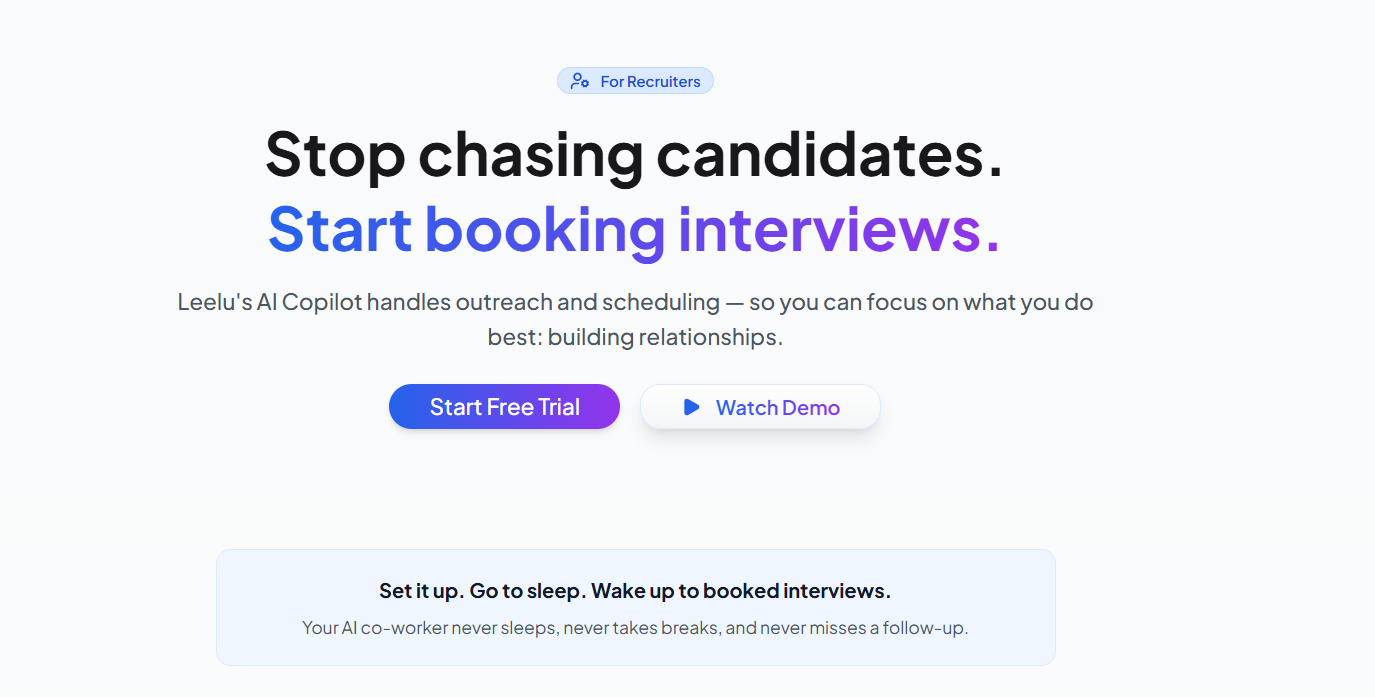
The most effective hiring teams in 2026 are not fully automated—they are hybrid systems where AI handles execution and humans handle judgment.
According to Eightfold AI’s Talent Intelligence Report 2024, organizations that combine AI-driven insights with human decision-making see significantly better hiring outcomes than those relying purely on automation.
This is because AI is excellent at:
- Processing large volumes of data
- Identifying patterns
- Ranking candidates
But it still struggles with:
- Contextual judgment
- Cultural alignment
- Relationship-building
Even real-world hiring discussions in 2025 highlight this gap.
Recruiters often mention that AI-generated shortlists are helpful, but final decisions still depend heavily on human evaluation, especially for leadership and niche roles.
So the role of recruiters is evolving.
You are no longer just executing hiring tasks.
You are acting as the final decision layer on top of AI systems.
Trend #7 — Employer Branding Becomes a Talent Magnet
The balance of power in hiring has shifted.
Candidates now choose companies as much as companies choose candidates.
This is why employer branding is no longer a marketing function—it is a core hiring strategy.
According to Randstad Employer Brand Research 2024, over 75% of candidates say they would not even apply to a company with a poor reputation, even if the salary is competitive.
What’s driving this shift is visibility.
Candidates today are constantly exposed to:
- Employee-generated content
- Workplace reviews
- Leadership opinions
- Hiring experiences shared online
And this content is shaping perception before a recruiter even reaches out.
Reddit threads in communities like r/jobs and r/recruitinghell make this even clearer. Candidates openly share negative hiring experiences, and those posts influence how others perceive companies at scale.
This means employer branding is no longer controlled—it is earned.
Companies that:
- Communicate transparently
- Showcase real employee experiences
- Maintain consistency across hiring touchpoints
are attracting better talent without increasing sourcing effort.
Trend #8 — Rising Focus on AI Ethics, Compliance & Fair Hiring
As AI becomes deeply embedded in recruitment, the biggest concern is no longer efficiency.
It is fairness.
Governments and regulatory bodies are now actively stepping in to define how AI should be used in hiring. This is especially important because biased or opaque systems can directly impact candidate opportunities at scale.
According to New York City Local Law 144 (effective 2023, expanded in 2024 enforcement), companies using automated employment decision tools must conduct bias audits and disclose how these systems are used.
At the same time, Stanford HAI’s 2024 AI Index Report highlights increasing global concern around algorithmic bias and lack of transparency in hiring systems.
This creates a new layer of responsibility for companies.
You now need to ensure:
- AI decisions are explainable
- Hiring processes are auditable
- Bias is actively monitored and reduced
Recruiters are also becoming more cautious.
In 2025 discussions, many hiring teams mention hesitation in blindly trusting AI outputs without validation, especially in regulated industries.
This is where hiring is headed.
Not just faster and smarter—but accountable and transparent.
Trend #9 — Always-On Hiring Becomes the New Normal
Up until recently, hiring started when a role opened.
In 2026, that approach is already too late.
Companies are shifting toward always-on hiring, where talent pipelines are built continuously instead of reactively. This means you are not waiting for a requirement to start sourcing—you are already engaging with potential candidates long before the role exists.
This shift is happening because:
- Hiring cycles are getting longer
- Competition for top talent is increasing
- The best candidates are rarely actively applying
So instead of “opening a role and starting from scratch,” you are:
- Building talent pools in advance
- Staying in touch with high-potential candidates
- Running ongoing outreach and engagement
By the time a role opens, you are not searching.
You are selecting.
This is a subtle shift, but it completely changes how recruiting pipelines are built and maintained.
Trend #10 — Internal Hiring and Talent Mobility Gain Momentum
One of the biggest hiring realizations companies are having is this:
The fastest hire is someone who already works for you.
Instead of relying only on external hiring, organizations are investing heavily in internal mobility. That means filling roles by moving, promoting, or reskilling existing employees.
This is not just a cost-saving strategy.
It solves multiple problems at once:
- Reduces time-to-hire
- Improves retention
- Keeps institutional knowledge intact
According to LinkedIn’s Workplace Learning insights, internal mobility is now a top priority for talent leaders, especially in companies trying to do more with leaner teams.
What’s changing in practice is how companies enable this.
They are building internal systems where employees can:
- Discover open roles within the company
- Apply across departments
- Take on short-term projects to build new skills
Hiring is no longer just external.
It is becoming an internal-first strategy.
Trend #11 — Multi-Channel Sourcing Beyond LinkedIn
Recruitment is no longer limited to one platform.
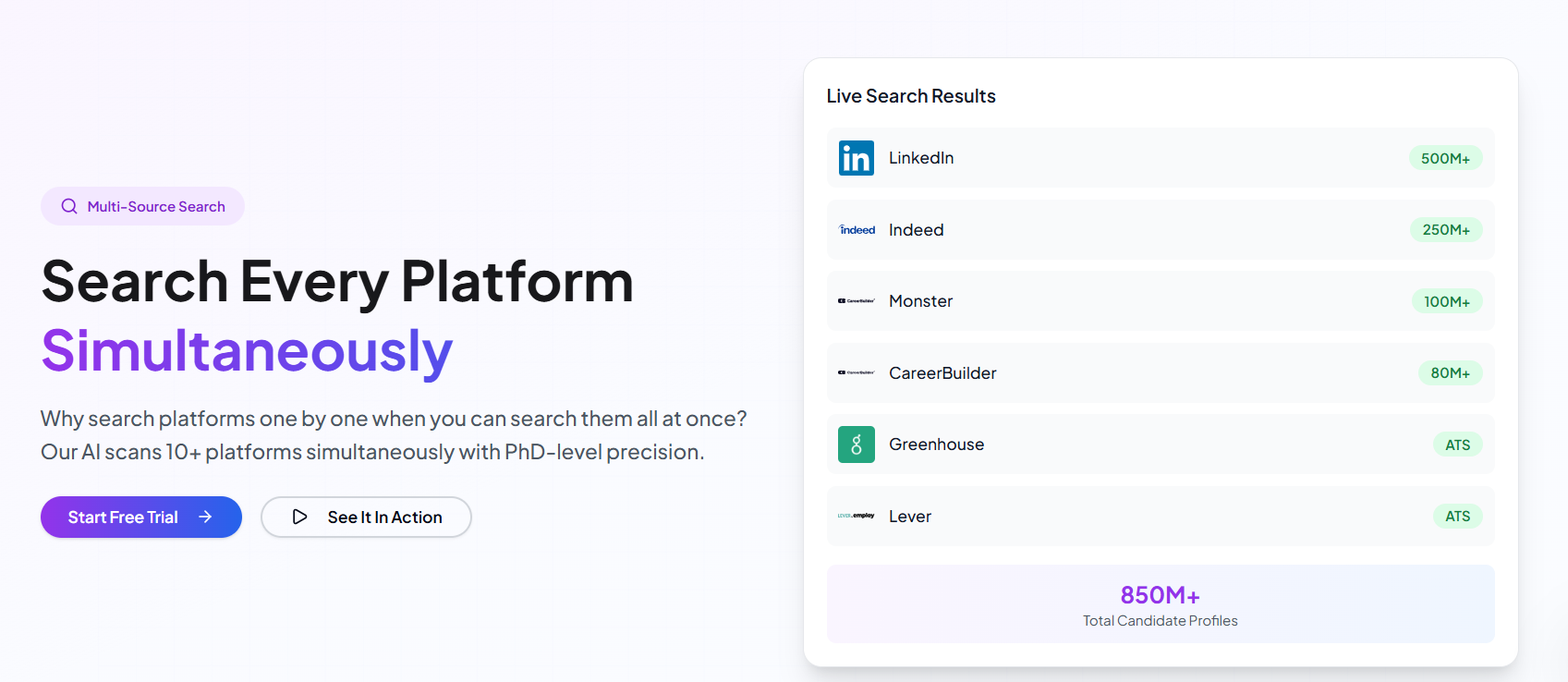
While LinkedIn still plays a major role, it is no longer enough on its own—especially for niche or highly competitive roles.
Recruiters are now expanding into multi-channel sourcing, where candidates are discovered across different platforms based on where they actually spend time.
This includes:
- GitHub for developers
- Kaggle for data professionals
- Reddit and Discord communities
- Industry-specific job boards and forums
The shift here is simple.
Instead of expecting candidates to come to you, you are going to where they already are.
This approach is becoming more important because:
- Passive candidates dominate the market
- Traditional job postings are getting saturated
- Niche talent is often hidden in communities, not job boards
Recruiting is starting to look a lot like distribution.
The better your reach, the better your pipeline.
Trend #12 — Hiring Speed Becomes a Competitive Advantage
Speed is no longer just about efficiency.
It directly impacts whether you hire the candidate or lose them.
In 2026, candidates are applying to multiple companies at the same time. They are evaluating responses, timelines, and communication speed just as much as they evaluate the role itself.
This creates a new reality.
The company that moves faster often wins.
Not because they are better—but because they are quicker.
According to Greenhouse’s Hiring Report, faster hiring processes significantly improve offer acceptance rates, especially in competitive roles where candidates have multiple options.
This is why companies are now optimizing:
- First response time
- Interview turnaround speed
- Feedback loops between interview stages
Even a delay of a few days can lead to drop-offs.
Hiring speed is no longer an internal KPI.
It is a candidate conversion lever.
Conclusion
Recruitment in 2026 is no longer just about filling roles—it’s about building smarter, faster, and more adaptive hiring systems.
From AI-driven workflows to skills-based hiring and always-on pipelines, the way companies approach talent is fundamentally changing.
If you want to stay competitive, the focus should be clear: combine technology with human judgment, move faster without compromising experience, and make decisions backed by data. The companies that do this well will not just hire faster—they will consistently hire better.
Frequently Asked Questions
1. What are the top recruitment industry trends in 2026?
AI-driven hiring, skills-based recruitment, automation, data-driven decisions, and improved candidate experience are the key trends shaping 2026.
2. How is AI changing recruiting industry trends?
AI is automating sourcing, screening, and outreach while helping recruiters make faster and more accurate hiring decisions.
3. Will AI replace recruiters in the future?
No, AI will support recruiters by handling repetitive tasks, while humans focus on decision-making and relationship-building.
4. What is skills-based hiring in recruitment?
It is a hiring approach where candidates are evaluated based on their skills and abilities rather than degrees or job titles.
5. How can companies prepare for future hiring trends?
By adopting AI tools, focusing on skills-based hiring, improving candidate experience, and using data to guide hiring decisions.